Last summer, I was chasing down a persistent misfire on my daily driver — the engine stumbled at every stoplight, fuel economy tanked, and the check engine light blinked like a warning beacon. After swapping coils and checking wiring, the culprit turned out to be a set of spark plugs that looked like they'd survived a volcanic eruption. Recognizing the symptoms of bad spark plugs early would have saved me weeks of frustration and a few hundred dollars in unnecessary parts. Whether you're maintaining your first vehicle or managing a fleet, understanding when these small components fail is essential to keeping your engine running cleanly and efficiently — and it ties directly into broader car care practices you should already be following.
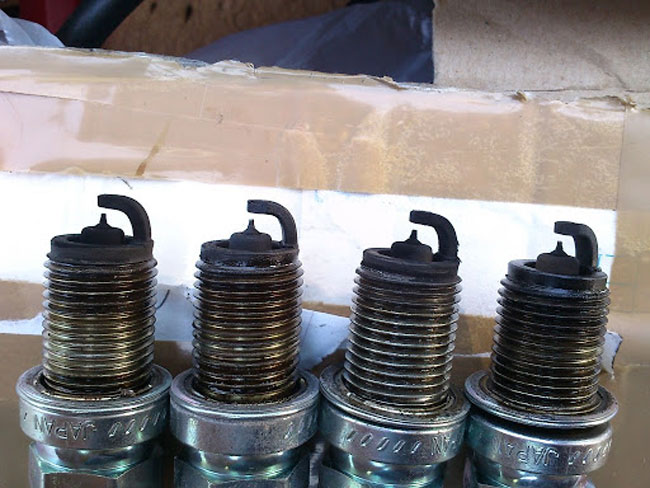
Spark plugs are deceptively simple — a ceramic insulator, a center electrode, and a ground strap. Their job is to ignite the air-fuel mixture inside each cylinder at precisely the right moment, thousands of times per minute. When they degrade, the effects cascade through your entire powertrain. You feel it in the seat of your pants, you see it at the fuel pump, and eventually your catalytic converter pays the price.
The good news is that diagnosing worn spark plugs doesn't require expensive scan tools or a mechanic's intuition. The symptoms are predictable, the inspection is straightforward, and replacement is one of the most accessible maintenance tasks you can tackle at home. Let's break down exactly what to watch for, when to act, and what most people get wrong.
Contents
Diagnosing Spark Plug Failure
The symptoms of bad spark plugs typically don't appear overnight. Degradation is gradual — the electrode wears down thousandths of a millimeter at a time, the gap widens incrementally, and carbon deposits accumulate layer by layer. By the time you notice a problem, the plug has likely been underperforming for thousands of miles. Here's how to catch it before real damage occurs.
Engine Misfires and Rough Idle
A misfire happens when the spark plug fails to ignite the air-fuel mixture during a combustion cycle. You'll feel it as a stumble or shudder, particularly at idle when the engine runs at its lowest RPM and has the least momentum to mask irregularities. A single misfiring cylinder drops your engine's power output by 25% on a four-cylinder vehicle. Your tachometer needle may fluctuate, and in severe cases the engine shakes enough to vibrate through the steering wheel.
The check engine light will typically illuminate with codes P0300 through P0312, indicating random or cylinder-specific misfires. Don't ignore a flashing check engine light — that indicates active misfires severe enough to damage your catalytic converter. Raw, unburned fuel passes straight through the exhaust and overheats the catalyst substrate.
Poor Acceleration and Hesitation
When you press the throttle and feel a momentary delay before the engine responds, worn spark plugs are a prime suspect. The widened electrode gap requires higher voltage to jump, and under load — when cylinder pressures are highest — the ignition coil may not produce enough energy to bridge that gap reliably. You'll notice this most during highway merging, hill climbing, or any situation demanding full throttle.
This hesitation is distinct from fuel delivery problems. A clogged fuel filter causes sustained power loss, while spark plug issues create intermittent stumbles that come and go. If you've recently dealt with understanding the differences between oil and fuel filters, you already know how each component's failure presents differently.
Increased Fuel Consumption
Your engine's efficiency depends on complete combustion. When spark plugs can't ignite the mixture fully, unburned fuel exits through the exhaust — wasted energy your wallet absorbs. Studies from the EPA's Green Vehicles program confirm that misfiring engines can reduce fuel economy by up to 30%. Even before a full misfire occurs, weak ignition leads to incomplete burn cycles that quietly drain your tank faster than expected.
Track your fuel economy over several fill-ups. A consistent drop of 10-15% without changes in driving habits or routes points toward ignition system degradation. This is especially true if the drop coincides with higher mileage intervals.
Pro tip: If your fuel economy drops suddenly after a fill-up, rule out bad gasoline first. A gradual decline over weeks or months is the classic spark plug wear signature.
Spark Plug Myths That Cost You Money
The internet is full of spark plug advice that ranges from outdated to outright wrong. Some myths lead to premature replacement (wasting money), while others encourage neglect (wasting engines). Let's separate fact from fiction.
Iridium Lasts Forever
Iridium plugs are excellent — their fine-wire center electrodes resist wear far better than copper or platinum. But "100,000-mile lifespan" is a ceiling, not a guarantee. That rating assumes ideal conditions: proper air-fuel ratios, clean oil that doesn't leak past valve seals, consistent operating temperatures, and no carbon buildup from short trips. In reality, many iridium plugs show significant electrode erosion by 60,000-70,000 miles, particularly in turbocharged engines where cylinder pressures run higher.
The ground electrode wears too. Most people focus on the center electrode's condition, but the ground strap erodes from the spark's heat at the same rate. Even if the center iridium tip looks pristine, a worn ground electrode widens the effective gap beyond specification.
All Spark Plugs Are the Same
Heat range, electrode material, thread reach, and gap specification all vary by application. Installing a plug with the wrong heat range causes either fouling (too cold) or pre-ignition (too hot). The correct part number matters — your owner's manual or a parts database cross-reference is non-negotiable. Aftermarket "performance" plugs with exotic electrode shapes rarely outperform the OEM-specified plug in a stock engine.
This is similar to how engine sludge prevention requires the right oil for your specific application. Using incorrect products creates problems that proper maintenance prevents. If you've ever dealt with removing engine sludge, you know that prevention through correct specifications beats repair every time.
When to Replace: Intervals and Real-World Scenarios
Replacement timing depends on your plug type, driving conditions, and engine design. The following table provides baseline intervals, but your specific situation may demand earlier attention.
| Spark Plug Type | Material | Typical Lifespan | Best For |
|---|---|---|---|
| Copper/Nickel | Copper core, nickel alloy tip | 20,000–30,000 miles | Older vehicles, high-performance engines requiring cold plugs |
| Single Platinum | Platinum center electrode | 60,000–80,000 miles | Standard DIS (distributorless) ignition systems |
| Double Platinum | Platinum on both electrodes | 60,000–80,000 miles | Waste-spark ignition systems |
| Iridium | Iridium center, platinum ground | 80,000–100,000 miles | Modern coil-on-plug engines, daily drivers |
| Ruthenium | Ruthenium alloy tips | 80,000–100,000 miles | Latest generation engines, improved ignitability |

Mileage-Based Guidelines
Your owner's manual lists a recommended replacement interval. Follow it as a maximum — not a target. If you drive gently on highways, you may reach that mileage with plugs still performing adequately. But the cost of spark plugs is trivial compared to catalytic converter replacement, so erring on the conservative side makes financial sense.
For most modern vehicles with iridium plugs, inspecting at 60,000 miles and replacing by 80,000 is a practical approach. If you're running copper plugs in an older or modified engine, plan on annual replacement or every 20,000 miles — whichever comes first.
Driving Conditions That Accelerate Wear
Not all miles are equal. These conditions shorten spark plug life significantly:
- Short trips under 10 minutes — the engine never reaches full operating temperature, promoting carbon fouling
- Stop-and-go city driving — frequent idle time accumulates deposits faster than highway cruising
- Towing or heavy loads — increased cylinder pressures accelerate electrode erosion
- Modified engines (turbo, supercharged, tuned) — higher combustion pressures and temperatures demand more from the plug
- Oil consumption issues — oil ash deposits on electrodes and insulators, creating conductive paths that short-circuit the spark
If three or more of these apply to your driving, reduce the manufacturer's interval by 20-30%. A plug that's rated for 100,000 miles in ideal conditions may only deliver 65,000-70,000 miles in severe service.
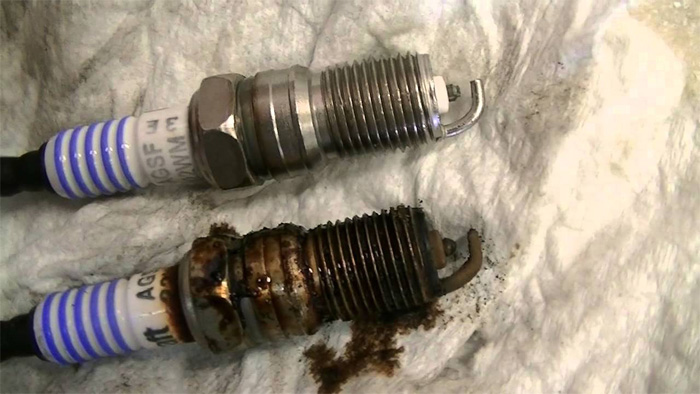
Warning: If your spark plugs show oil fouling when removed, don't just replace them — diagnose why oil is entering the combustion chamber. Valve seals, piston rings, or PCV system failure need attention first.
Common Mistakes That Ruin New Spark Plugs
Installing fresh spark plugs seems foolproof, but several common errors can damage new plugs immediately or cause premature failure. These mistakes account for the majority of "I just replaced my plugs and still have problems" scenarios.
Incorrect Torque and Gap Settings
Over-torquing a spark plug crushes the sealing washer beyond its designed compression, distorts the shell, and can crack the ceramic insulator — creating an internal short that causes misfires from day one. Under-torquing leaves the plug loose, allowing combustion gases to leak past the threads. This overheats the plug's base and can weld the plug to the head over time.
Always use a torque wrench. Specifications typically range from 12-30 Nm depending on thread size and head material (aluminum heads require less torque than cast iron). The "finger-tight plus a quarter turn" method is acceptable only when a torque wrench is genuinely unavailable — and even then, it's a compromise.
Pre-gapped plugs from the manufacturer are usually correct, but always verify with a wire-type gap gauge before installation. Shipping damage or wrong application can leave the gap outside specification. Iridium and platinum plugs should never be gapped with a traditional coin-style tool — the fine-wire electrode will break.
Ignoring Related Components
Spark plugs don't operate in isolation. Installing new plugs while ignoring worn ignition coils, cracked boots, or corroded connectors gives you the same symptoms you started with. The ignition coil must produce enough voltage to jump the plug gap under full compression — a weak coil paired with a new plug still misfires under load.
Similarly, if you're already pulling spark plugs, inspect the coil boots for carbon tracking (gray or white lines running along the inside of the rubber boot). Carbon tracks create alternate paths for the spark energy, diverting it away from the plug gap. Replacement boots cost a few dollars and prevent repeat failures. This attention to surrounding components applies to any maintenance task — just like when you're working on an over-tightened oil plug, the surrounding threads and gasket matter as much as the plug itself.
DIY vs Professional Replacement
Spark plug replacement ranges from a 20-minute driveway job to a multi-hour ordeal depending entirely on your engine's layout. Knowing which category your vehicle falls into saves you from starting a job you can't finish on a Sunday afternoon.
The Basic Four-Cylinder Swap
Inline four-cylinder engines with coil-on-plug ignition are the easiest. The plugs sit on top of the engine, accessible after removing the coil packs (usually one bolt each). You need a 5/8" or 16mm spark plug socket with a rubber insert, a 6-inch extension, a ratchet, a torque wrench, and a gap gauge. Total time for an experienced DIYer: 30-45 minutes including gap verification.
The process is straightforward. Disconnect the coil connector, remove the coil bolt, pull the coil straight up, use the spark plug socket with extension to unscrew the old plug, check the new plug's gap, thread the new plug in by hand (to prevent cross-threading), torque to specification, reinstall the coil, reconnect. Repeat for each cylinder.
Thread the plug by hand for the first several turns. If it resists, back it out and try again. Cross-threading a spark plug hole in an aluminum head is an expensive mistake that requires helicoil repair — a job that definitely requires professional equipment.
When to Call a Mechanic
V6 and V8 engines in transverse (sideways) mounting positions often bury the rear bank of spark plugs against the firewall. Some Ford V6 designs require partial intake manifold removal. Subaru's boxer engines need the vehicle on a lift for reasonable access. BMW's inline-six engines have plugs recessed in deep wells that accumulate debris — requiring compressed air cleaning before removal to prevent cylinder contamination.
If accessing your spark plugs requires removing the intake manifold, throttle body, or other major components, the labor savings of DIY diminish rapidly. Professional mechanics have the specialty tools, lift access, and experience to handle seized plugs without breaking them off in the head. A broken spark plug extraction can easily cost $500-1,000 per cylinder — far more than paying for professional installation from the start.
Consider the job's complexity honestly. There's no shame in paying a professional for a task that requires specialty tools or positions you can't comfortably reach. Save your DIY energy for maintenance that matches your skill level and tool collection.
Frequently Asked Questions
Can bad spark plugs cause a car not to start?
Yes. If all spark plugs are severely fouled or worn beyond function, the engine won't fire at all. More commonly, you'll experience extended cranking before the engine catches — the starter spins longer because only some cylinders are igniting on each revolution. A complete no-start from spark plugs alone is rare in multi-cylinder engines since it requires all plugs to fail simultaneously.
Do spark plugs affect gas mileage?
Worn spark plugs reduce fuel economy by 10-30% depending on severity. Incomplete combustion wastes fuel that passes unburned through the exhaust. The wider the electrode gap grows beyond specification, the more inconsistent ignition becomes, and the more fuel your engine wastes per cycle. Replacing worn plugs typically restores fuel economy immediately.
What does a bad spark plug look like?
A healthy plug has a light tan or gray insulator nose. Black, sooty deposits indicate rich running or oil contamination. White, blistered electrodes suggest overheating. Heavy electrode erosion with rounded edges means the plug has exceeded its service life. Oil-wet deposits point to mechanical engine problems beyond the plug itself.
Can I drive with bad spark plugs?
You can, but you shouldn't. Driving with misfiring plugs sends unburned fuel into the catalytic converter, potentially causing thermal damage that costs $1,000-2,500 to repair. Short-term driving to a repair shop is acceptable, but continued daily driving with known misfire codes accelerates damage to expensive downstream components.
How much does spark plug replacement cost?
Parts cost $8-15 per plug for quality iridium units, so a four-cylinder set runs $32-60. Professional labor adds $60-200 depending on engine accessibility. V6 and V8 engines with difficult rear-bank access can push labor costs to $300-400. DIY replacement on accessible engines costs only the parts plus your time.
Should I replace all spark plugs at once?
Always replace the complete set. Spark plugs wear at similar rates since they operate under identical conditions. Mixing new and old plugs creates uneven combustion characteristics across cylinders, potentially triggering misfire codes on the older plugs shortly after the partial replacement — doubling your labor.
Do spark plugs need to be gapped?
Most modern spark plugs come pre-gapped from the manufacturer for common applications. However, you should always verify the gap with a gauge before installation. Shipping can alter the gap, and some plugs cover multiple applications with different specifications. Iridium and platinum plugs require a wire-type gauge — never use a coin-style gapper that pries against the fine-wire electrode.
Your spark plugs ask for almost nothing — just the right part number, correct torque, and replacement before they're completely spent. Give them that, and they'll give you thousands of trouble-free miles in return.


About Chris Lewis
Chris Lewis developed a deep knowledge of automotive filtration, maintenance, and repair through years of hands-on experience working on vehicles — a passion rooted in time spent in his father's San Francisco auto shop from an early age. He has practical familiarity with air, oil, fuel, and cabin filter systems across a wide range of vehicle makes and models, along with experience evaluating the tools and equipment that serious DIY mechanics rely on. At MicrogreenFilter, he covers automotive and motorcycle filter reviews, maintenance guides, and automotive tool recommendations.
Get FREE Filters now. Or latest free tools from our best collections.
Disable Ad block to get all the secrets. Once done, hit any button below