When you're weighing a motorcycle vs car comparison, the honest answer is neither vehicle is universally better — it depends on your budget, commute, lifestyle, and risk tolerance. Both have clear advantages that the other simply can't match. If you spend most of your time on motorcycle maintenance and weekend rides, you already know the thrill two wheels offer. But if you're hauling a family or navigating harsh winters, four wheels win without debate. This guide breaks down every major factor so you can make the right call for your situation — whether you're choosing a first vehicle or adding to your garage.

The motorcycle vs car comparison isn't just about price tags or speed — it touches insurance, fuel economy, storage, maintenance schedules, and long-term ownership costs. We'll walk through the numbers, safety data, and practical trade-offs so you can see the full picture. If you've ever wondered how often to change your car's oil filter, you already appreciate how maintenance costs stack up over time.
Let's dig into what really matters when choosing between two wheels and four.
Contents
Total Cost of Ownership: Motorcycles vs Cars
Cost is usually the first thing people compare, and motorcycles win on almost every line item — at least on paper. But the full picture is more nuanced than sticker price alone.
Purchase Price Differences
A reliable new motorcycle starts around $5,000–$10,000, while a comparable new car runs $28,000–$35,000. Used markets reflect the same gap:
- Used motorcycles (3–5 years old): $3,000–$8,000
- Used cars (3–5 years old): $15,000–$25,000
- Entry-level scooters: $2,000–$4,000
- Budget economy cars: $18,000–$22,000
That initial savings is significant. But remember — you might still need a car for bad weather or cargo, which means owning both.
Insurance and Fuel Costs
| Expense Category | Motorcycle (Annual) | Car (Annual) |
|---|---|---|
| Insurance (avg) | $700–$1,500 | $1,500–$2,500 |
| Fuel (12,000 mi/yr) | $400–$700 | $1,200–$2,000 |
| Registration/taxes | $50–$200 | $150–$500 |
| Tires (per set) | $200–$400 | $400–$800 |
| Oil changes (annual) | $100–$200 | $150–$300 |
| Parking (monthly urban) | $50–$100 | $150–$300 |
Motorcycles average 40–60 MPG compared to 25–35 MPG for most sedans. Over five years of ownership, that fuel difference alone saves $3,000–$5,000. Keeping up with regular air filter changes helps both vehicles maximize fuel efficiency.
How to Choose the Right Vehicle for Your Needs
The motorcycle vs car comparison ultimately comes down to matching a vehicle to your daily reality. Here's a step-by-step approach to making the decision.
Assess Your Commute
- Measure your daily distance. Under 30 miles round-trip favors motorcycles heavily — less fuel, easier parking, lane-splitting where legal.
- Check weather patterns. If you face rain or snow more than 60 days per year, a car becomes essential for reliable daily transport.
- Evaluate road conditions. Gravel roads, construction zones, and poorly maintained routes increase motorcycle risk significantly.
- Consider cargo needs. If you regularly haul groceries, tools, or equipment, a car's trunk solves problems a motorcycle can't.
- Factor in passengers. Carrying another person on a motorcycle requires specific gear and skill. A car handles it effortlessly.
Lifestyle and Practical Factors
- Family size — kids essentially require a car
- Garage/storage space for gear and the vehicle itself
- Physical fitness and comfort with exposure to elements
- Your tolerance for ongoing skill development (riding courses, defensive techniques)
- Local infrastructure — bike lanes, lane-splitting laws, parking availability
If you can't commit to wearing full protective gear on every single ride — no exceptions — a car is the safer default for daily commuting.
Quick Savings Either Way
Regardless of which vehicle you choose, there are immediate ways to reduce your total cost of ownership.
Motorcycle Cost Cuts
- Buy used — motorcycles depreciate 20–30% in the first year alone
- Take a safety course to earn insurance discounts (often 10–15% off premiums)
- Do your own oil changes and chain maintenance — saves $300+/year
- Install a quality air filter and maintain it properly for peak MPG
- Store the bike properly in winter to avoid seasonal damage
Car Cost Cuts
- Replace your own cabin air filter — dealers charge $60–$80 for a 5-minute job
- Bundle insurance if you own both a motorcycle and a car
- Keep tires inflated to spec — improves fuel economy by 3%
- Use synthetic oil for longer intervals between changes
- Learn basic maintenance like jump-starting your car to avoid roadside assistance fees

When a Motorcycle Makes Sense (and When It Doesn't)
Context matters more than generalizations in the motorcycle vs car comparison. Here's where each vehicle truly shines — and where it falls short.
Ideal Motorcycle Scenarios
- Urban commuting in warm climates — parking is free or cheap, fuel costs are halved, and you skip gridlock
- Solo riders without daily cargo needs
- Second vehicle for fair-weather use alongside a car
- Enthusiasts who value the riding experience itself
- Budget-conscious buyers who want low entry cost and minimal ongoing expenses
When You Need a Car Instead
- Year-round commuting in variable climates — rain, ice, and snow make motorcycles impractical and dangerous
- Families with children or regular passengers
- Jobs requiring equipment transport (tools, samples, deliveries)
- Long highway commutes over 50 miles — fatigue and exposure become real factors
- Areas without adequate motorcycle infrastructure or with high theft rates
Many riders eventually settle on owning both. A motorcycle handles the daily commute during good months while the car covers everything else. This dual-ownership approach costs more upfront but can save money over running a single expensive car year-round.

Building Long-Term Value from Your Choice
Thinking beyond the first year of ownership reveals important differences in how motorcycles and cars hold their value and accumulate costs.
Depreciation and Resale
Cars lose roughly 60% of their value in five years. Motorcycles depreciate faster initially (year one) but stabilize sooner — popular models from Honda, Yamaha, and Kawasaki hold value remarkably well after the first two years.
- Classic and retro-styled motorcycles often appreciate over time
- Low-mileage bikes retain 60–70% of value after three years
- Economy cars (Civic, Corolla) hold value best among four-wheelers
- Trucks and SUVs depreciate slower than sedans in most markets
If resale matters to you, buying a popular model with strong aftermarket support gives you the best exit strategy regardless of vehicle type.
Maintenance Over the Years
Motorcycles need more frequent attention but each service costs less. Cars need less frequent service but each visit hits harder. Over a 5-year span:
- Motorcycle: chain adjustment every 500 mi, oil every 3,000–5,000 mi, valve checks at 15,000 mi, tire replacement every 8,000–12,000 mi
- Car: oil every 5,000–10,000 mi, brakes every 30,000–50,000 mi, tires every 40,000–60,000 mi, major service (timing belt, transmission) at 60,000–100,000 mi
The motorcycle demands your attention more often, but you can handle most tasks in a home garage with basic tools. Car maintenance increasingly requires specialized equipment and diagnostic computers, driving up shop costs. Understanding how vehicles are built gives you appreciation for what goes into maintaining either one long-term.

Safety and Performance Best Practices
No motorcycle vs car comparison is complete without addressing the elephant in the room: safety. The numbers are stark, but context and preparation make an enormous difference.
Safety by the Numbers
According to the National Highway Traffic Safety Administration (NHTSA), motorcyclists are approximately 29 times more likely to die in a crash per vehicle mile traveled than car occupants. However, this statistic includes all riders — many without proper training or gear.
Factors that dramatically reduce motorcycle risk:
- Full-face helmet — reduces fatality risk by 37%
- Completion of MSF (Motorcycle Safety Foundation) course
- High-visibility gear and reflective elements
- ABS-equipped motorcycles — reduce fatal crash risk by 31%
- Avoiding riding at night, in rain, or after any alcohol consumption
- Defensive riding mindset — assume every driver doesn't see you
Cars offer structural protection that motorcycles physically cannot. Crumple zones, airbags, seatbelts, and electronic stability control create multiple layers between you and impact forces. That's a fundamental advantage no amount of riding skill fully compensates for.
Real-World Performance
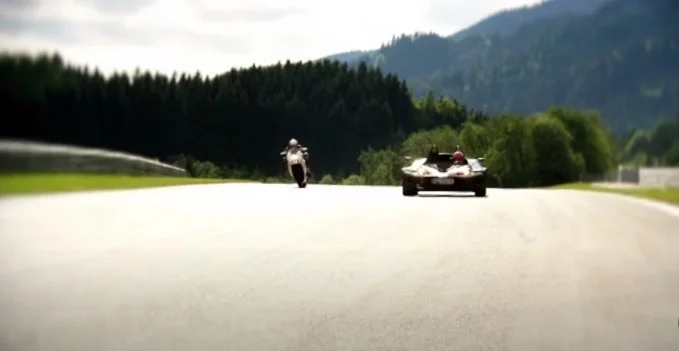
On paper, motorcycles dominate in power-to-weight ratio. A $10,000 sportbike outperforms a $60,000 sports car in acceleration. But real-world performance isn't just about speed:
- Braking distance: Cars stop shorter in wet conditions due to four contact patches versus two
- Cornering: Motorcycles lean into corners but lose traction faster on debris or painted lines
- Highway cruising: Cars offer superior comfort, noise isolation, and wind protection
- City maneuverability: Motorcycles navigate congestion and park in spaces cars can't access
Your performance needs should match your primary use case. If your commute involves heavy traffic, a motorcycle's agility is a genuine practical advantage — not just a fun bonus.
Frequently Asked Questions
Is a motorcycle actually cheaper than a car overall?
Yes, in most scenarios. Between lower purchase price, better fuel economy, cheaper insurance, and reduced maintenance costs, motorcycles save the average owner $3,000–$6,000 per year compared to a mid-range car. The gap narrows if you need a car anyway for weather or cargo, since then you're paying to own two vehicles.
Can a motorcycle be your only vehicle?
It depends entirely on your climate and lifestyle. In warm regions like Southern California or Florida, many riders go motorcycle-only year-round. But in areas with harsh winters, regular rain, or if you have a family, relying solely on a motorcycle creates significant limitations for errands, emergencies, and passenger transport.
How much riding experience do you need before commuting on a motorcycle?
Most safety experts recommend at least 1,000 miles of practice in low-traffic environments before commuting in city traffic. Complete a basic rider course first, then spend several weekends on quiet roads building muscle memory for braking, swerving, and slow-speed maneuvers before adding rush-hour stress.
Do motorcycles require more maintenance than cars?
Motorcycles need more frequent maintenance intervals — chain adjustments, more frequent oil changes, and shorter tire life. However, each individual service is simpler and cheaper. Most motorcycle maintenance is DIY-friendly, while modern cars increasingly require dealer-level diagnostic tools for even basic services.
The best vehicle isn't the one with better specs on paper — it's the one that fits your daily life without forcing compromises you'll resent six months from now.


About Chris Lewis
Chris Lewis developed a deep knowledge of automotive filtration, maintenance, and repair through years of hands-on experience working on vehicles — a passion rooted in time spent in his father's San Francisco auto shop from an early age. He has practical familiarity with air, oil, fuel, and cabin filter systems across a wide range of vehicle makes and models, along with experience evaluating the tools and equipment that serious DIY mechanics rely on. At MicrogreenFilter, he covers automotive and motorcycle filter reviews, maintenance guides, and automotive tool recommendations.
Get FREE Filters now. Or latest free tools from our best collections.
Disable Ad block to get all the secrets. Once done, hit any button below