You pull up to a parking lot, swing the door open, and when you go to close it again, it just doesn't catch. You push harder. It bounces back. If your car door won't close properly, the problem is almost always mechanical — a dry latch, a shifted striker plate, or a sagging hinge — and most cases are fixable at home in under an hour. This guide is your complete walkthrough, covering diagnosis, hands-on repairs, and ongoing upkeep as part of smart DIY maintenance for your vehicle.
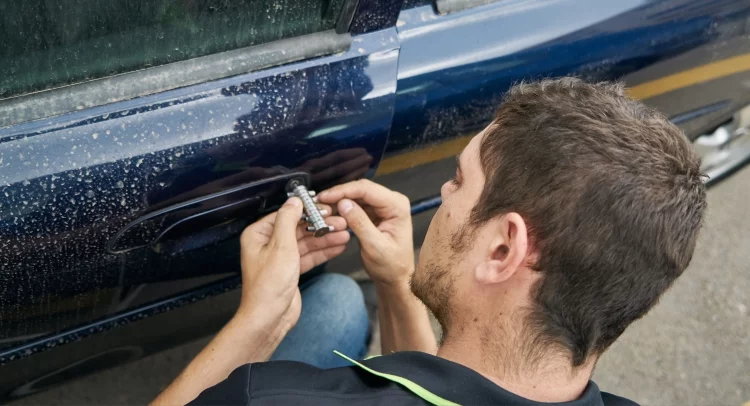
The door latch and striker system is elegantly simple: a spring-loaded latch on the door edge grabs a striker bolt mounted to the door frame. When those two fall out of alignment — through wear, corrosion, or hinge damage — the door stops latching securely. Pinpointing which component has failed points you straight to the fix.
Before you schedule a shop appointment, read through this guide. The repairs here are based on real procedures, the parts cost under $60 in the worst cases, and the most common fix takes five minutes and a $8 can of lubricant.
Contents
How to Diagnose the Problem
The Three Usual Suspects
When a car door won't close properly, the root cause almost always falls into one of three categories:
- The latch — the spring-loaded mechanism on the door edge. Corrosion, dirt buildup, or mechanical wear makes it stiff, slow to reset, or completely non-functional.
- The striker plate — the bolt or loop mounted on the door frame. If it's worked loose or shifted over time, the latch can't engage at the right depth or angle.
- The door hinges — worn or bent hinges allow the door to sag vertically, misaligning the latch and striker even if both components are otherwise fine.
Each cause has a distinct feel. A stiff latch resists closing even when you push firmly. A shifted striker makes the door feel like it's catching on something. Hinge sag shows up as visible droop when the door is fully open.
Running a Quick Visual Inspection
Before touching any tools, run this 60-second check:
- Open the door fully and examine the latch on the door edge. Press the release lever — it should snap back cleanly and immediately.
- Look at the striker on the door frame. Check whether the bolt has any side-to-side play or looks shifted from its original position.
- Open and close the door slowly while watching the hinge area for any vertical drop or grinding.
- Run a finger along the door seal all the way around. A compressed or torn weatherstrip creates enough resistance to prevent full latching, especially on older vehicles.
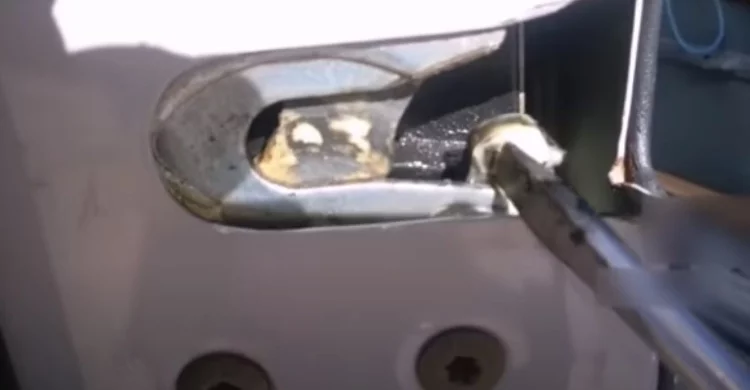
This inspection narrows the field before you spend a single minute on repairs. Most of the time, you'll have your answer before you've even picked up a wrench.
Step-by-Step: Fixing a Car Door That Won't Close
Step 1 — Adjust the Door Striker
The striker is the most common fix and the easiest starting point. You'll need a Torx T50 or hex key — check your vehicle's specific striker bolt type beforehand.
- Loosen the striker bolts slightly. Don't remove them — just break the torque so you can shift the striker.
- To find the exact contact point, rub a grease pencil or lipstick on the striker face, then close the door gently. Open it and read the mark left on the latch — it shows where contact is being made.
- Shift the striker up, down, inward, or outward as needed. Even a 1–2mm adjustment often resolves the problem entirely.
- Tighten the bolts incrementally and test the door after each small movement.
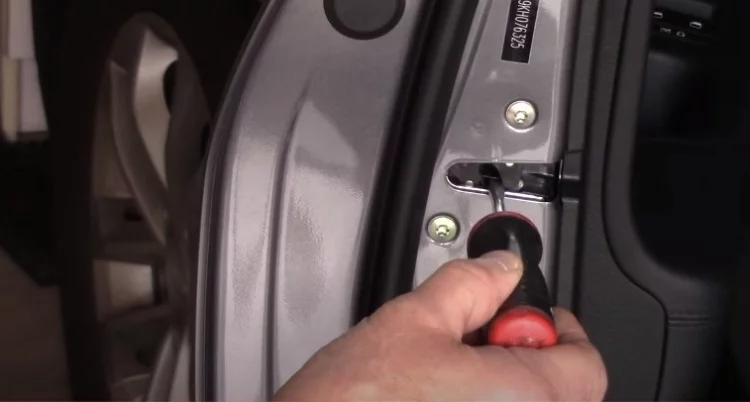
Don't overtighten the striker bolts — stripped threads mean a far more expensive repair than the original problem.
Step 2 — Lubricate the Latch Mechanism
A dry or corroded latch won't release and reset properly. This fix costs under $10 and takes five minutes.
- Get a can of white lithium grease spray or a dedicated door latch lubricant. Avoid WD-40 as a long-term solution — it evaporates quickly and attracts grime.
- Spray directly into the latch opening on the door edge. Be generous.
- Work the release lever back and forth a dozen times to distribute the lubricant throughout the mechanism.
- Wipe away excess from the door edge to prevent dirt buildup.
If the latch moves freely afterward, you've solved it. Test the door at both slow and firm close speeds before calling it done.
Step 3 — Address Hinge Sag
Sagging hinges require more effort but are still a DIY job on most vehicles with bolt-on hinges.
- Open the door and support it from underneath using a floor jack and a piece of wood. This takes the weight off the hinge so you can work on it properly.
- Tighten all hinge bolts firmly. On most vehicles, they're accessible from inside the door jamb without removing trim panels.
- If the hinge pin itself is worn (you'll feel play when lifting the door), hinge pin replacement kits run $10–$20 at any auto parts store.
- Recheck door alignment after tightening. Minor sag often resolves with tightened fasteners alone.
Smart Fixes and Pro Tips for a Stubborn Door
Temporary Solutions When You're in a Bind
If you're stuck and can't do a proper repair immediately, here's what works short-term:
- Loop a bungee cord or ratchet strap through the window opening to hold the door shut. Never drive with an unsecured door — it can swing open during a turn.
- A rope tied through the interior grab handle works for very short distances in an emergency.
- Avoid slamming the door repeatedly to force it closed. Every impact worsens the striker and hinge condition.
Pro Tips From the Shop
- When lubricating, also spray the door check strap — the arm that holds the door open at set positions. A stiff check strap puts extra stress on hinges every time the door is opened.
- If you've moved the striker more than 4mm in any direction and the door still doesn't close cleanly, the problem is deeper — worn hinges or a bent door frame.
- Check your interior door components at the same time. A damaged inner handle rod or linkage clip can interfere with latch operation in ways that look like a latch failure. The same attention to detail that applies to fixing a broken car visor applies here — small interior components matter.
- After any repair, test the door by closing it at different speeds. A door that closes fine slowly but pops open when closed firmly still has an alignment issue.
Routine Maintenance to Keep Your Door Latching Right
Building a Simple Lubrication Schedule
Most door latch failures are the result of neglect. A door that gets regular attention lasts indefinitely without major repairs. Follow this schedule and you'll rarely deal with a door that won't close:
| Task | Frequency | Product | Time Required |
|---|---|---|---|
| Latch lubrication | Every 6 months | White lithium grease spray | 5 minutes |
| Hinge lubrication | Every 6 months | Spray lubricant or grease | 10 minutes |
| Striker bolt inspection | Annually | Torx or hex key set | 10 minutes |
| Weatherstrip conditioning | Annually | Rubber conditioner | 15 minutes |
| Door check strap lubrication | Annually | Spray lubricant | 5 minutes |
| Hinge pin inspection | Every 2 years | Visual only | 5 minutes |
Weatherstrip Care
The door seal is easy to overlook but critical for proper closing. A compressed or cracked weatherstrip adds enough friction to prevent the latch from fully engaging — especially in cold weather.
- Clean the seals twice a year with a damp cloth to remove dirt and road grime.
- Apply rubber conditioner (303 Aerospace Protectant works well) to keep the seal pliable and prevent cracking.
- Inspect the full perimeter for tears or sections that have pulled away from the channel. Replace those sections before they compress further.
Keeping up with small maintenance tasks across your vehicle pays compounding dividends. The same mindset that drives you to know how often to change your cabin air filter should apply to door hardware — regular checks prevent expensive repairs down the road.
What It Costs to Fix the Problem
DIY Cost Breakdown
If you do the work yourself, door latch repairs are among the most affordable fixes in automotive maintenance:
| Repair Type | DIY Parts Cost | Tools Needed |
|---|---|---|
| Striker adjustment | $0 (no parts needed) | Torx or hex key set |
| Latch lubrication | $5–$10 | None |
| Hinge pin replacement | $10–$20 per hinge | Drift punch, hammer |
| Full latch assembly replacement | $25–$65 (OEM or aftermarket) | Screwdrivers, panel removal tool |
| Bolt-on hinge replacement | $30–$80 per hinge | Socket set, floor jack, wood block |
Professional Repair Estimates
Shop rates vary by region, but these ranges reflect typical labor-inclusive pricing:
- Striker adjustment: $50–$100 (mostly labor for a 20-minute job)
- Latch replacement: $150–$300 including parts and labor
- Bolt-on hinge replacement: $200–$400 per hinge
- Welded hinge replacement: $350–$600+ (requires cutting, welding, and paint blending)
The DIY savings on a latch or striker fix are substantial — you're often paying $100–$200 in labor for a repair that takes under 30 minutes with basic tools. That said, welded hinges and bent door frames are situations where professional work is genuinely worth the cost.
DIY vs. Professional Repair: Weighing Your Options
The Case for Doing It Yourself
DIY makes clear sense in these situations:
- The problem is a loose striker, dry latch, or worn hinge pins
- You have basic mechanical comfort and common hand tools
- The vehicle isn't under warranty or a leased car
- You have a free afternoon and want to learn the repair
Beyond cost savings, doing the work yourself means you understand exactly what was fixed and can repeat it. That knowledge is genuinely useful the next time a door or another component acts up.
When to Call a Professional
Hand the job off when:
- The door frame itself is bent from collision damage
- The hinges are welded rather than bolted (common on European and older vehicles)
- Power lock actuators, door sensors, or wiring are involved
- You've made multiple striker adjustments with no lasting improvement
If electrical components are misbehaving alongside the mechanical issue — say, a door sensor that never registers the door as closed — that's a separate diagnostic challenge. Knowing how to find a short in a car is a useful skill before paying for a full electrical diagnostic at a shop.
Frequently Asked Questions
Why does my car door keep popping open while driving?
The latch isn't fully engaging the striker when you close the door. This is a safety issue — stop and either adjust the striker or lubricate the latch before driving again. Driving with an unlatched door is dangerous at any speed.
Can a misaligned door cause weatherstrip damage?
Yes. When the door closes at the wrong angle repeatedly, it compresses the seal unevenly, leading to tears, gaps, and water leaks. Fix the alignment first, then inspect the weatherstrip for damage.
How do I know if the problem is the latch or the striker?
Coat the striker face with a grease pencil or lipstick, close the door gently, then open it. The transfer mark shows exactly where the latch is making contact. Off-center or shallow contact points to a striker alignment issue; a clean but unresponsive latch points to the latch mechanism itself.
Is it safe to drive with a car door that won't close properly?
No. A door that isn't fully latched can swing open during braking, cornering, or in a collision. Treat this as an immediate fix — not something to address "when you get around to it."
How long does a full latch replacement take?
For most vehicles, 30–60 minutes. You'll remove the interior door panel, disconnect the lock rod and handle cables, swap the latch assembly, reconnect everything, and reinstall the panel. The job is straightforward on vehicles with accessible door panels.
Can cold weather cause a car door to stick or not close?
Yes. Moisture inside the latch mechanism can freeze and prevent the spring from resetting properly. Applying a dry lubricant or silicone spray to the latch before winter — and keeping the latch well-lubricated year-round — prevents this reliably.
Does replacing the latch affect the power lock system?
It can. If you replace the latch assembly, verify that the new unit is compatible with your vehicle's power lock actuator before purchasing. OEM parts are safest on vehicles with integrated lock actuators. Aftermarket latches sometimes require a separate actuator swap.
Key Takeaways
- A car door that won't close properly almost always traces back to a loose striker, a dry latch, or worn hinge pins — all fixable at home for under $20 in parts.
- Lubricating the latch and hinges every six months is the single most effective way to prevent door latch failures before they start.
- DIY repairs save $100–$400 in labor costs, but welded hinges and bent door frames are legitimate reasons to hand the job to a professional.
- A door that pops open while driving is a safety emergency — fix it immediately, not eventually.


About Chris Lewis
Chris Lewis developed a deep knowledge of automotive filtration, maintenance, and repair through years of hands-on experience working on vehicles — a passion rooted in time spent in his father's San Francisco auto shop from an early age. He has practical familiarity with air, oil, fuel, and cabin filter systems across a wide range of vehicle makes and models, along with experience evaluating the tools and equipment that serious DIY mechanics rely on. At MicrogreenFilter, he covers automotive and motorcycle filter reviews, maintenance guides, and automotive tool recommendations.
Get FREE Filters now. Or latest free tools from our best collections.
Disable Ad block to get all the secrets. Once done, hit any button below