Last summer, a colleague dropped a handheld radio into a puddle at a remote trail staging area, and within seconds the unit was dead. That single incident cost more than the radio itself — it meant lost communication during a convoy run through unpaved terrain. If you have ever relied on a two-way radio in harsh conditions, you understand why selecting the best waterproof Baofeng radios is not merely a preference but a necessity. Whether you use radios for off-road adventures, job-site coordination, or emergency preparedness, understanding IP ratings and model differences will protect your investment and keep you connected. For more gear and equipment guidance, explore our tools section.

Baofeng radios have earned a reputation as the most affordable entry point into two-way and amateur radio communication. However, not every Baofeng model offers the same level of protection against water and dust. The difference between an IP54-rated radio and an IP67-rated unit can determine whether your device survives a rainstorm or a creek crossing. This guide breaks down the IP rating system, compares the top waterproof Baofeng models side by side, and provides actionable advice for selecting and maintaining the right radio for your needs.
If you are weighing different communication options for vehicle use, our comparison of walkie talkies, CB radios, and ham radios offers a broader perspective on which platform suits your situation.
Contents
Understanding IP Ratings for Two-Way Radios
Before you compare specific models, you need to understand the rating system that defines water and dust resistance. The Ingress Protection (IP) rating is an international standard published by the International Electrotechnical Commission (IEC) that classifies the degree of protection a device's enclosure provides. You can review the full standard framework on the IP Code Wikipedia page.
What the Two Digits Mean
Every IP rating consists of two digits. The first digit rates solid particle protection (dust), and the second rates liquid ingress protection (water). Here is a breakdown of the levels most relevant to radio buyers:
- First digit (solids): 0 = no protection, 5 = dust-protected (limited ingress), 6 = dust-tight (complete protection)
- Second digit (liquids): 4 = splash-proof, 5 = low-pressure water jets, 6 = powerful water jets, 7 = temporary immersion (up to 1 meter for 30 minutes), 8 = continuous submersion
A radio rated IP67 is fully dust-tight and survives temporary immersion. A radio rated IP54 allows limited dust ingress and only resists splashes. That gap matters enormously in the field.
Common IP Ratings on Baofeng Models
Most Baofeng radios fall into one of three tiers:
- No IP rating — budget models such as the UV-5R (original) offer zero certified water protection.
- IP54 to IP56 — mid-range models handle rain and splashes but cannot survive submersion.
- IP67 to IP68 — premium models endure full immersion and are suitable for marine, off-road, and extreme weather use.
Pro Tip: An IP rating applies only when all covers, caps, and gaskets are properly sealed. A radio rated IP67 with an open accessory port is effectively unrated.
Best Waterproof Baofeng Radios: Head-to-Head Comparison
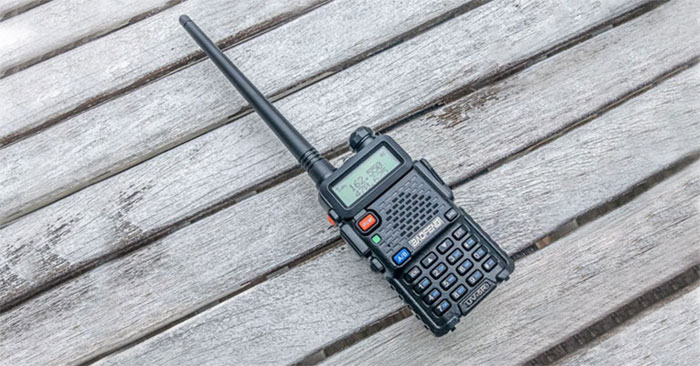
Choosing among the best waterproof Baofeng radios requires comparing more than just IP ratings. Frequency range, power output, battery capacity, and build quality all influence real-world performance. The table below provides a direct comparison of the leading models currently available.
Specification Comparison Table
| Model | IP Rating | Frequency | Power (W) | Battery (mAh) | Weight (g) | Price Range |
|---|---|---|---|---|---|---|
| Baofeng UV-9R | IP67 | VHF/UHF Dual | 8 | 2200 | 276 | $35–$45 |
| Baofeng UV-9R Plus | IP67 | VHF/UHF Dual | 8 | 2800 | 298 | $40–$55 |
| Baofeng UV-9R Pro | IP68 | VHF/UHF Dual | 16 | 2800 | 310 | $50–$65 |
| Baofeng UV-9R ERA | IP68 | VHF/UHF Dual | 16 | 3800 | 325 | $55–$70 |
| Baofeng BF-9700 | IP67 | UHF Only | 8 | 2200 | 268 | $30–$40 |
| Baofeng UV-5R (original) | None | VHF/UHF Dual | 5 | 1800 | 220 | $20–$30 |
Top Model Highlights
Each model serves a different use case. Here is what distinguishes them:
- UV-9R Plus — The best balance of price, protection, and battery life. Ideal for most users who need reliable waterproofing without the premium cost of the Pro or ERA models.
- UV-9R Pro — Delivers IP68 protection and 16W output, making it suitable for users who operate near open water or in sustained heavy rain. The higher wattage extends range in challenging terrain.
- UV-9R ERA — The flagship option. Its 3800mAh battery provides the longest runtime, and IP68 certification means it handles continuous submersion. Best for marine applications or extended field operations.
- BF-9700 — A budget-friendly IP67 option, though limited to UHF frequencies. Suitable for users who do not need VHF access and want basic waterproofing at a low price.
If you frequently wire accessories or install communication equipment in vehicles, you may find our guide on how to wire a light bar on a Jeep helpful — similar wiring principles apply when mounting a mobile radio setup.
Best Practices for Waterproof Radio Use
Even the best waterproof Baofeng radios require proper handling to maintain their rated protection level over time. Water resistance degrades with use, and negligence accelerates that decline. Follow these practices to maximize the lifespan of your equipment.
Maintaining Seals and Gaskets
- Inspect the rubber gaskets around the battery compartment, antenna port, and charging contacts before each use in wet conditions.
- Replace cracked or compressed gaskets immediately. Most Baofeng models use standard O-ring sizes available at hardware stores.
- Apply a thin layer of silicone-based lubricant to gaskets every three to six months. This prevents drying and maintains a tight seal.
- Never force a battery cover closed — uneven pressure indicates a misaligned gasket, which creates a direct path for water ingress.
Charging and Storage
- Dry the radio thoroughly before placing it in a charging cradle. Moisture on the charging contacts causes corrosion over time.
- Store radios in a cool, dry environment. Avoid leaving them in vehicles during extreme heat, as elevated temperatures degrade rubber seals faster than water exposure.
- Remove the battery if you plan to store the radio for more than 30 days. This prevents battery swelling, which can warp the compartment seal.
Warning: Charging a wet radio is one of the fastest ways to destroy the internal circuitry. Always confirm the unit is completely dry before connecting power.
Proper tool storage and maintenance habits carry over from other automotive work. Our article on how to remove grease from machinery covers cleaning principles that apply equally well to electronic equipment exposed to harsh conditions.
Common Mistakes That Ruin Waterproof Radios
Many users purchase a waterproof radio and assume the IP rating provides indefinite protection under all circumstances. That assumption leads to premature failure. Here are the most common errors and how to avoid them.
Overestimating Your Radio's Rating
- Confusing IP67 with IP68. IP67 means the radio survives temporary immersion at 1 meter for 30 minutes. It does not mean you can use it as a dive radio. IP68 extends that to deeper or longer submersion, but the specific depth and duration vary by manufacturer.
- Ignoring water temperature. IP ratings are tested with room-temperature water. Hot water (from engine compartments, for example) causes materials to expand differently, compromising seals.
- Assuming salt water is the same as fresh water. Salt water is more corrosive and can degrade seals faster. After ocean exposure, rinse the radio with fresh water immediately.
Ignoring Accessory Vulnerabilities
- Aftermarket antennas, earpieces, and programming cables often lack the original model's waterproof sealing. Every time you swap an accessory, you potentially compromise the IP rating.
- Speaker-mic adapters create an additional point of failure. Use adapters with built-in gaskets, or cover unused ports with the factory-supplied rubber plugs.
- Programming your radio with a USB cable requires opening a sealed port. Always replace the port cover immediately after programming is complete.
These types of overlooked details mirror common mistakes in automotive maintenance. As we discuss in our breakdown of synthetic winch rope vs steel cable, choosing the right equipment is only half the equation — proper use and maintenance determine real-world reliability.
Essential Accessories and Equipment
Pairing the best waterproof Baofeng radios with the right accessories enhances both durability and functionality. The accessories below are specifically recommended for wet and dusty environments.
Protective Cases and Covers
- Nylon carrying cases with drainage grommets — Allow water to exit the case rather than pooling around the radio.
- Silicone radio covers — Add an extra layer of splash protection and absorb impact from drops. Available for UV-9R series models.
- Dry bags — For extreme conditions (kayaking, boating), store the radio in a waterproof dry bag with a clear panel for screen visibility.
Antennas and Extended Batteries
- Nagoya NA-771 antenna — A popular upgrade that improves range by 20–40% over the stock antenna. Ensure you select the version with a rubber base gasket for maintaining waterproof integrity.
- Extended 3800mAh batteries — Available for the UV-9R and UV-9R Plus. These add bulk but significantly extend operating time in cold weather, where battery capacity drops.
- USB-C charging cables with magnetic connectors — Eliminate the need to open the charging port entirely, preserving the seal.
Pro Tip: When upgrading your antenna, apply a single wrap of PTFE (Teflon) tape around the SMA connector threads before tightening. This creates a secondary moisture barrier at the antenna junction.
The same attention to choosing the right tool for the job applies in other areas of vehicle maintenance. If you have ever struggled with a stuck fastener, our guide on how to remove an over-tightened oil plug illustrates why having the correct equipment prevents damage.
Quick Wins to Improve Radio Durability
You do not need to spend significant money or time to improve your radio's resistance to the elements. The following modifications and habits take minutes but deliver measurable protection gains.
Five-Minute Upgrades
- Apply conformal coating to the circuit board. Remove the back cover, apply a thin layer of silicone conformal coating spray to the PCB, and allow it to cure for 24 hours. This creates a secondary waterproof barrier inside the radio.
- Replace the stock antenna gasket. Many Baofeng radios ship with thin, low-quality antenna port gaskets. A thicker aftermarket O-ring (typically 10mm ID × 2mm cross-section) provides a superior seal.
- Add dielectric grease to the battery contacts. A small application of dielectric grease prevents corrosion on the battery terminals without impeding electrical conductivity.
- Tether the radio to your gear. Use a paracord lanyard attached to the belt clip or antenna base. Dropping a radio into water from height can exceed the pressure thresholds of its IP rating.
Field-Tested Tips
- Carry a small packet of silica gel in your radio pouch. It absorbs ambient moisture and prevents condensation inside the radio during temperature changes.
- After every wet-environment use, blow compressed air into the speaker and microphone grilles to clear trapped water droplets.
- Test your radio's waterproof integrity annually by submerging it in a basin of water (with the battery installed and all ports sealed) for 10 minutes. Monitor for air bubbles, which indicate a compromised seal.
- Keep a spare set of port covers in your toolkit. These small rubber plugs are the most commonly lost component and the easiest point of failure.
Frequently Asked Questions
Can you fully submerge a Baofeng UV-9R Plus in water?
The UV-9R Plus carries an IP67 rating, which certifies it for temporary immersion at up to 1 meter depth for 30 minutes. It is not designed for continuous underwater use or depths beyond 1 meter. Always verify that all port covers and gaskets are properly sealed before any water exposure.
Do aftermarket accessories void the waterproof rating?
They do not void the manufacturer's stated rating, but they can compromise the physical sealing if the accessories lack proper gaskets. Stock rubber port covers, gaskets, and antenna connectors are engineered to maintain the IP standard. Any third-party component that alters the enclosure creates a potential ingress point.
How do you clean a Baofeng radio after salt water exposure?
Rinse the entire unit with fresh water immediately after salt water contact. Use a soft brush to clear salt deposits from the speaker grille, microphone port, and antenna junction. Dry the radio completely with a lint-free cloth, then allow it to air-dry for at least two hours before charging or opening any sealed ports.
Is the Baofeng UV-5R waterproof at all?
No. The original Baofeng UV-5R has no IP rating and is not designed to resist water or dust. Even light rain can damage the internal electronics. If you need water resistance, upgrade to the UV-9R series or the BF-9700, which are purpose-built with sealed enclosures.
Next Steps
- Assess your environment. Determine the specific conditions your radio will face — rain, submersion, dust, salt spray — and match those conditions to the appropriate IP rating tier (IP54 for light exposure, IP67 for rain and brief submersion, IP68 for sustained water contact).
- Inspect your current radio's seals. If you already own a Baofeng, remove the battery cover and antenna, then examine every gasket and rubber plug for cracks, compression, or brittleness. Replace any compromised seals before your next field use.
- Order one key accessory. Start with the single upgrade that addresses your biggest vulnerability — a replacement antenna gasket, a silicone cover, or a dry bag. Do not attempt every modification at once.
- Program your radio before heading out. Complete all frequency programming and cable connections at home, in a dry environment. Seal all ports before departure so you never need to open them in the field.
- Test waterproof integrity. Perform the basin submersion test described above at least once per season. Document any bubbles, and address seal failures immediately rather than relying on a rating that may no longer hold.


About Chris Lewis
Chris Lewis developed a deep knowledge of automotive filtration, maintenance, and repair through years of hands-on experience working on vehicles — a passion rooted in time spent in his father's San Francisco auto shop from an early age. He has practical familiarity with air, oil, fuel, and cabin filter systems across a wide range of vehicle makes and models, along with experience evaluating the tools and equipment that serious DIY mechanics rely on. At MicrogreenFilter, he covers automotive and motorcycle filter reviews, maintenance guides, and automotive tool recommendations.
Get FREE Filters now. Or latest free tools from our best collections.
Disable Ad block to get all the secrets. Once done, hit any button below