Last summer, I spent a full Saturday helping a buddy wire a 50-inch light bar to his JK Wrangler. We had the bar mounted in twenty minutes — and then burned four hours chasing a phantom short because he'd skipped the relay. That experience taught me more about how to wire light bar jeep setups than any YouTube video ever could. Whether you're prepping for night trail runs or just want better visibility on unlit back roads, a properly wired light bar transforms your Jeep's capability. This guide walks you through everything — from choosing the right gauge wire to avoiding the mistakes that leave you sitting in the dark. If you're working on other automotive upgrades alongside this project, a clean wiring job makes every future mod easier.
The wiring itself isn't complicated — a relay, a switch, a fuse, and the right gauge wire handle 90% of installations. The part that trips people up is understanding why each component matters and where shortcuts cause failures. A light bar pulling 20+ amps through undersized wire generates heat, melts insulation, and eventually kills the circuit or worse.
Below, you'll find a step-by-step breakdown covering everything from busting common wiring myths to building a setup that lasts for years of trail abuse. Each section builds on the last, so even if you've done basic electrical work before, read through — there are details here that catch experienced wrenchers off guard.
Contents
- Common Myths About Wiring a Jeep Light Bar
- Essential Tools and Supplies You Already Have
- When You Need a Relay (and When You Don't)
- What a Light Bar Wiring Job Actually Costs
- Wiring Techniques That Prevent Headaches
- Basic Wiring vs. Advanced Multi-Bar Setups
- Hardwired vs. Quick-Disconnect: Weighing Your Options
- Lessons from Real Jeep Light Bar Installs
- Maintaining Your Light Bar Wiring for the Long Haul
- Frequently Asked Questions
- Next Steps
Common Myths About Wiring a Jeep Light Bar
Forums and social media are packed with wiring advice that ranges from slightly wrong to genuinely dangerous. Before you strip a single wire, clear out the misinformation so you're building on solid ground.
The "Wire Directly to the Battery" Myth
You'll hear this constantly: just run your positive and negative straight to the battery terminals and call it done. While the power does ultimately come from the battery, skipping the relay means your switch carries the full amperage load. A 20-amp light bar running through a cheap toggle switch generates enough heat to melt the switch housing within months. The relay lets a small trigger current (from the switch) control the high-current circuit — it's the same principle behind every starter motor in every vehicle on the road.
The other half of this myth ignores fusing. Without an inline fuse between the battery and the light bar, a short circuit has nothing stopping it from turning your wiring harness into a fire starter. Always fuse within 18 inches of the battery's positive terminal.
The "Any Wire Gauge Works" Myth
Wire gauge matters more than most people realize. The relationship between current draw, wire length, and required gauge is governed by basic electrical resistance — the American Wire Gauge standard exists for exactly this reason. For most single light bars pulling 10-25 amps with runs under 12 feet, 14-gauge wire works. Push past that amperage or run longer distances, and you need 12-gauge or even 10-gauge.
- Undersized wire creates voltage drop — your bar dims noticeably
- Excess resistance generates heat in the wire itself
- Over time, heated insulation becomes brittle and cracks, exposing bare copper to your chassis
Essential Tools and Supplies You Already Have
One reason people overcomplicate how to wire light bar jeep projects is they think they need specialized equipment. You don't. Most of what you need is already in your garage.
Your Checklist Before Starting
- Wire crimper/stripper (the combination tool works fine)
- Electrical tape and heat-shrink tubing (heat-shrink is strongly preferred)
- Zip ties and adhesive-backed cable mounts
- Test light or multimeter
- Socket set for mounting brackets and ground bolts
- Wire loom or split conduit for exposed runs
- Butt connectors, ring terminals, and spade connectors
If you've ever installed a Jeep antenna, you already own most of this. The wire stripper and crimper do the heavy lifting, and a $15 multimeter from any auto parts store handles every diagnostic you'll need.
What You Can Skip Buying
You don't need a soldering iron for a light bar install. Properly crimped connections with heat-shrink tubing are more vibration-resistant than solder joints in an off-road environment. Solder wicks moisture and creates a rigid point in the wire that cracks under repeated flex. Crimped and sealed connections outperform solder on trail rigs every time.

When You Need a Relay (and When You Don't)
The relay question comes up in every light bar thread. Here's the straightforward answer: it depends entirely on current draw.
Installs That Demand a Relay
Any light bar pulling more than 10 amps needs a relay. Period. That covers virtually every bar longer than 20 inches. The standard 30/40-amp Bosch-style relay costs under $5 and takes ten minutes to wire. There's no good reason to skip it.
A relay also protects your Jeep's factory wiring. Running high current through the dash switch circuit can back-feed into other systems and trigger bizarre electrical gremlins — flickering gauges, phantom warning lights, even interference with your radio. If you've ever wondered what dashboard warning lights mean, a bad aftermarket wiring job is a surprisingly common cause.
Low-Draw Setups That Skip It
Small pod lights or single-row bars under 12 inches sometimes pull only 2-5 amps. At that current level, a quality switch rated for 15+ amps can handle the load directly. You still need an inline fuse, but the relay becomes optional.
- Ditch lights under 30W per pair — relay optional
- Rock lights on a dedicated circuit — relay optional if total draw stays under 10A
- Any combination exceeding 10A total — use a relay
What a Light Bar Wiring Job Actually Costs
Budget is always a factor, so here's what you're actually looking at for a complete wiring job — light bar not included.
DIY Budget Breakdown
| Component | Price Range | Notes |
|---|---|---|
| Wiring harness kit (relay, fuse, switch, wire) | $15 – $35 | Pre-made kits save time; check amp rating |
| Additional 14-gauge wire (25 ft spool) | $8 – $12 | For extended runs or custom routing |
| Heat-shrink tubing assortment | $6 – $10 | Get marine-grade adhesive-lined |
| Wire loom / split conduit (10 ft) | $5 – $8 | Essential for engine bay and underbody |
| Ring and spade terminal kit | $7 – $12 | Buy more than you think you need |
| Inline fuse holder + spare fuses | $4 – $8 | Match fuse rating to bar's draw |
| Total DIY | $45 – $85 | Assumes you own basic hand tools |
Shop Install Pricing
Professional installation typically runs $75-$200 for labor on top of parts, depending on your area and the shop's familiarity with Jeeps. A 4x4 specialty shop charges more but routes wires properly and uses quality connectors. General auto shops sometimes take shortcuts that cause problems down the line — loose grounds, no wire loom, fuses sized wrong.
If you're comfortable with basic hand tools and can follow a wiring diagram, the DIY route saves significant money and gives you complete control over the quality of every connection.
Wiring Techniques That Prevent Headaches
The difference between a clean install and a problematic one comes down to how you route and connect your wires. The electrical theory is simple. The execution is where people go wrong.
Routing and Protecting Your Wires
Your wires need to survive everything a Jeep encounters — mud, water crossings, rocks, vibration, engine heat, and the occasional branch trying to snag anything loose. Route your wires along existing factory harness paths whenever possible. The factory engineers already figured out where wires survive.
- Use split wire loom for any run through the engine bay or along the frame
- Secure wires every 12-18 inches with zip ties or adhesive mounts
- Leave a small service loop near connections so you can re-terminate if needed
- Keep wires away from exhaust components — heat kills insulation faster than anything
- Route through existing firewall grommets rather than drilling new holes
When you need to pass wire through sheet metal, always use a rubber grommet. Bare wire against a drilled hole edge will chafe through within weeks of trail driving.
Connections That Won't Fail
Every failed light bar install I've diagnosed traced back to a bad connection. Not a bad relay, not a bad switch — a corroded or loose connector. Here's how to make connections that last:
- Strip wire to the correct length for your connector — too much exposed copper invites corrosion
- Use adhesive-lined heat-shrink over every crimp connection
- Apply dielectric grease to ground connections and any junction exposed to weather
- Tug-test every crimp before you button things up
For your ground connection, bolt the ring terminal to bare metal on the chassis — scrape off paint, primer, and any undercoating. A bad ground causes more wiring headaches than everything else combined.
Basic Wiring vs. Advanced Multi-Bar Setups
Your wiring approach scales dramatically depending on whether you're running a single bar or building out a full lighting system. Understanding both levels helps you plan for where your build is headed.
Single Bar, Single Switch
This is the standard install and where every beginner should start when learning how to wire light bar jeep rigs. The circuit is straightforward:
- Positive battery terminal → inline fuse → relay pin 30
- Relay pin 87 → light bar positive wire
- Light bar negative wire → chassis ground
- Switch positive → ignition-hot source (so the bar can't drain the battery when the Jeep is off)
- Switch output → relay pin 86
- Relay pin 85 → chassis ground
That's the entire circuit. Six connections, one fuse, one relay, one switch. If you can identify positive and negative wires and use a crimper, you can complete this install in under two hours.
Multiple Bars and Independent Controls
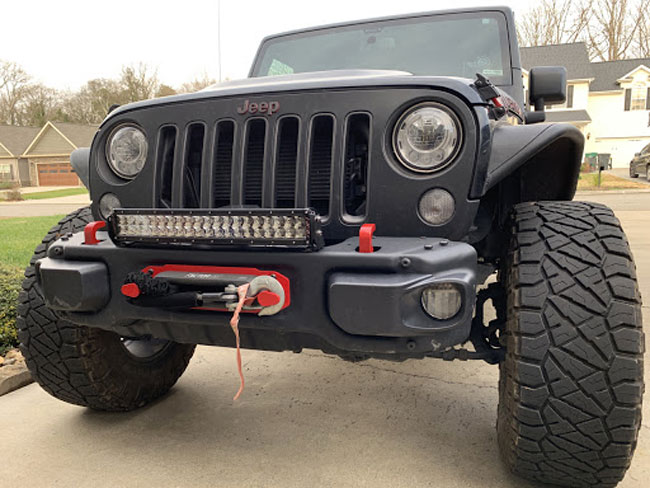
Once you start adding a bumper bar, ditch lights, rock lights, and rear-facing floods, things get more complex. The smart approach is to use a centralized relay box or a purpose-built auxiliary fuse panel mounted in the engine bay.
- Run a single heavy-gauge feed (8 or 10 AWG) from the battery to the auxiliary panel
- Each light circuit gets its own relay and fuse from that panel
- Individual switch wires run to the cab — these carry only trigger current (under 1 amp)
- All grounds converge on a common ground bus bar bolted to the frame
This approach keeps your wiring organized, makes troubleshooting simple, and lets you add future accessories without running new battery cables every time. If you're serious about off-road lighting, a winch and light bar wiring can share the same auxiliary panel, keeping your engine bay clean.
Hardwired vs. Quick-Disconnect: Weighing Your Options
This decision depends on how you use your Jeep. A dedicated trail rig calls for one approach; a daily driver that occasionally hits the trails needs another.
Hardwired Advantages
- Most reliable long-term — fewer connection points means fewer failure points
- Cleaner routing with no bulky connector housings to hide
- Lower resistance across the circuit
- Set it and forget it — no pre-trip connection rituals
Hardwiring is the right call for any bar you plan to leave permanently mounted. The connections are sealed, secured, and out of the way. For a roof-mounted bar on a Wrangler that lives outdoors, hardwired connections with proper weatherproofing outlast every other option.
Quick-Disconnect Advantages
- Remove the bar for car washes, garage clearance, or theft prevention
- Swap bars between vehicles (if mounting brackets match)
- Easier to troubleshoot — isolate the bar from the harness instantly
- Required if your state has strict auxiliary lighting laws for road use
If you go the quick-disconnect route, invest in Deutsch DT connectors or Weatherpack connectors — not the cheap two-pin bullet connectors that corrode in a single season. Quality waterproof connectors cost $8-15 per pair and survive years of exposure.
Lessons from Real Jeep Light Bar Installs
Theory only gets you so far. These two real-world installs highlight what goes right and wrong when you put wire to metal.
JK Wrangler Roof Mount Gone Wrong
A friend mounted a 52-inch curved bar on his JK using a cheap Amazon wiring harness. The kit included 16-gauge wire for a bar pulling 22 amps. Within three months, the wire insulation near the relay had turned brown from heat. The spade connectors — bare metal, no heat-shrink — had corroded to the point of intermittent contact.
The fix required rewiring the entire circuit with 12-gauge wire, replacing every connector with properly crimped and sealed terminals, and adding wire loom through the engine bay. Total repair time: five hours. The original install took two. The lesson: buying the cheapest harness kit costs you more in rework than buying quality components from the start.
JL Gladiator Bumper Bar Done Right
Another build — a JL Gladiator with a 30-inch bumper bar and two ditch lights — went smoothly because the owner planned the wiring before touching anything. He used a three-slot auxiliary fuse panel, ran 10-gauge feed wire, and routed everything through factory harness channels with split loom protection. Each circuit had its own clearly labeled fuse and relay.
Two years later, every connection is still clean. He's since added rock lights and a rear flood — both wired into the same panel with zero additional battery cables. That's the payoff of planning ahead.
Maintaining Your Light Bar Wiring for the Long Haul
Installing the wiring correctly is half the battle. Keeping it functional through seasons of use is the other half. Trail rigs take abuse that street cars never see, and your wiring needs periodic attention.
Seasonal Inspection Routine
Twice a year — before trail season and after — run through this inspection:
- Check every visible connection for corrosion, looseness, or heat discoloration
- Verify the fuse hasn't blown and matches the correct amperage rating
- Inspect wire loom for tears, especially near mounting brackets and frame edges
- Test the switch — it should click firmly with no flickering
- Verify the ground connection bolt is tight and the contact surface is still bare metal
- Run the bar for five minutes, then feel the wiring near the relay — warmth is normal, hot is a problem
This inspection takes fifteen minutes and catches problems before they leave you without lights on a night run. Think of it the same way you'd check your spark plugs or fluid levels — basic preventive maintenance that prevents expensive failures.
Fighting Corrosion Before It Starts
Corrosion is the number one killer of aftermarket wiring on Jeeps. Water crossings, salt spray, mud — all of it attacks exposed metal. Your defense is layered:
- Adhesive-lined heat-shrink on every connection — the adhesive creates a moisture seal when heated
- Dielectric grease on ground connections and inside any multi-pin connector
- Fluid Film or Boeshield T-9 sprayed on exposed terminal blocks and the relay socket
- Replace zip ties annually — UV and heat degrade them, and a snapped tie lets wire sag into harm's way
If you drive through salt water or treat your driveway with salt in winter, double down on corrosion protection. Coat ring terminals with liquid electrical tape after applying dielectric grease for a belt-and-suspenders seal.
Frequently Asked Questions
What gauge wire do I need for a 50-inch light bar on a Jeep?
Most 50-inch LED light bars draw 18-25 amps. For that current range with a typical 8-12 foot wire run, use 12-gauge wire for both the positive and negative leads. If your run exceeds 15 feet, step up to 10-gauge to avoid voltage drop that dims the bar and generates excess heat.
Can I wire a light bar without a relay?
Only if the bar draws under 10 amps and your switch is rated for that load. Any bar pulling more than 10 amps needs a relay to protect the switch and your wiring. A relay costs under $5 and takes minutes to install — there's no practical reason to skip it on a standard light bar.
Should I connect the light bar to the ignition or directly to the battery?
Wire the relay's power feed (pin 30) directly to the battery through a fuse. Wire the switch trigger through an ignition-hot source so the bar only operates when the Jeep is running. This prevents accidentally draining your battery if you leave the switch on.
Why does my light bar flicker after installation?
Flickering almost always points to a poor ground connection or a loose terminal. Check the ground bolt first — make sure it's tight and contacting bare metal with no paint or rust between the terminal and the chassis. If the ground is solid, inspect each crimp connection for looseness or corrosion.
Is it legal to drive with a light bar on a Jeep on public roads?
Laws vary by state and country. Most jurisdictions allow mounted light bars but require them to be covered or off while driving on public roads. Some states restrict bar placement (no roof bars, for example). Check your local vehicle code before mounting — the fine for illegal auxiliary lighting can exceed the cost of the entire setup.
Next Steps
- Gather your components and verify amperage. Check your specific light bar's amp draw (it's on the spec sheet or the bar itself), then buy wire and a fuse rated appropriately — don't guess.
- Map your wire route before cutting anything. Open the hood, trace the path from battery to bar mounting location, identify where you'll pass through the firewall, and measure the total wire length you need. Add 20% for service loops and routing detours.
- Do a dry run of the full circuit on your workbench. Lay out the relay, fuse, switch, and a short section of wire. Connect everything, hook it to a 12V source, and confirm the light bar fires. Finding a wiring mistake on the bench takes two minutes — finding it under the hood takes an hour.
- Complete the install and document it. Take photos of your wire routing, connector locations, and fuse rating. When you troubleshoot in the future — or add another light — you'll thank yourself for the reference.
- Run a full test under load. After everything is mounted and connected, run the bar for ten minutes and check every connection point for heat. Warm is acceptable. Hot means a connection needs attention before you hit the trail.


About Chris Lewis
Chris Lewis developed a deep knowledge of automotive filtration, maintenance, and repair through years of hands-on experience working on vehicles — a passion rooted in time spent in his father's San Francisco auto shop from an early age. He has practical familiarity with air, oil, fuel, and cabin filter systems across a wide range of vehicle makes and models, along with experience evaluating the tools and equipment that serious DIY mechanics rely on. At MicrogreenFilter, he covers automotive and motorcycle filter reviews, maintenance guides, and automotive tool recommendations.
Get FREE Filters now. Or latest free tools from our best collections.
Disable Ad block to get all the secrets. Once done, hit any button below