The tail light wiring repair cost typically falls between $50 and $300 for most vehicles, though complex faults can push that figure well above $400. The final number depends on the severity of the damage, the vehicle's make and model, and whether the repair is handled by a dealership or an independent shop. Our team at MicroGreenFilter covers a wide range of automotive maintenance topics, and tail light wiring consistently ranks among the fixes that catch people off guard — what looks like a simple bulb issue often traces back to corroded connectors, broken grounds, or deeper harness damage.
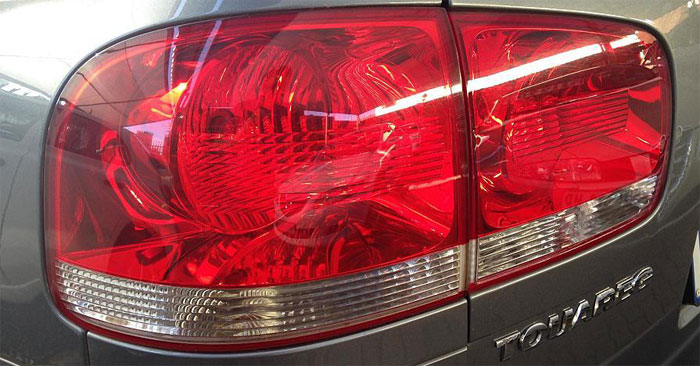
A non-functional tail light isn't just an inconvenience. In most states, driving with failed tail lights is a moving violation. According to the National Highway Traffic Safety Administration (NHTSA), lighting failures on vehicles are a documented contributor to rear-end collisions, particularly in low-visibility conditions. Our team takes both the safety dimension and the cost dimension seriously — which is why we put together this breakdown of what the repair actually involves, what drives the price, and how anyone can approach it with clear expectations.
The reassuring reality is that most tail light wiring failures stem from one specific, inexpensive fault. A corroded ground wire or a loose connector accounts for the majority of cases our team has researched. Knowing the full picture — from the simplest self-checks to the more involved harness repairs — helps anyone make smarter decisions before authorizing work at a shop.
Contents
What Actually Drives the Tail Light Wiring Repair Cost
The Most Common Causes of Wiring Failure
Tail light wiring doesn't fail randomly. The single most frequent culprit our team encounters across community forums, repair databases, and firsthand accounts is a corroded ground connection. Ground wires at the rear of a vehicle are continuously exposed to road moisture, road salt, and temperature cycling. Over time, oxidation builds up at the contact point until the circuit breaks entirely. A shop can clean or replace a corroded ground in under an hour — typically $40 to $80 in labor — making it the cheapest wiring repair on the list when correctly diagnosed from the start.
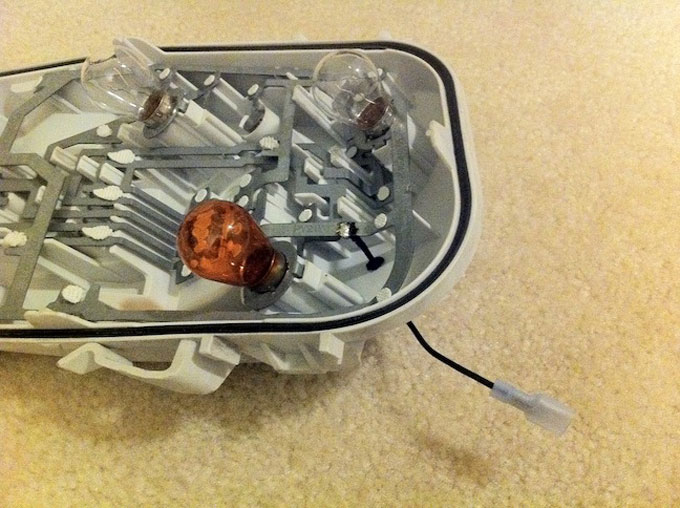
Beyond ground corrosion, common failure points include chafed wiring insulation in older vehicles where the wire loom has degraded, cracked or melted sockets from bulb heat, water intrusion into the tail light housing, and damaged trailer hitch connector assemblies. Our team also notes that rodent damage — gnawed wiring — has become an increasingly common cause in suburban and rural areas, sometimes creating multiple simultaneous faults that complicate diagnosis.
How Damage Severity Affects the Final Bill
The jump from a $60 repair to a $400 repair almost always comes down to how far the fault extends through the electrical system. A single bad socket or corroded terminal sits at the low end. A damaged section of the main tail light harness sits in the middle range. When the fault traces back to the body control module (BCM) — the computer that manages exterior lighting on many modern vehicles — costs escalate sharply. BCM replacement alone ranges from $300 to $900 depending on the vehicle, and programming adds to that. Diagnostic fees at most shops run $50 to $120, though reputable shops apply that fee toward the repair total if the work is authorized.
Pro tip: Always request a documented diagnostic result before authorizing any repair — a mechanic who can show which specific test failed is one who has actually done the work, not just guessed.
How Mechanics Repair Tail Light Wiring, Step by Step
The Diagnosis Phase
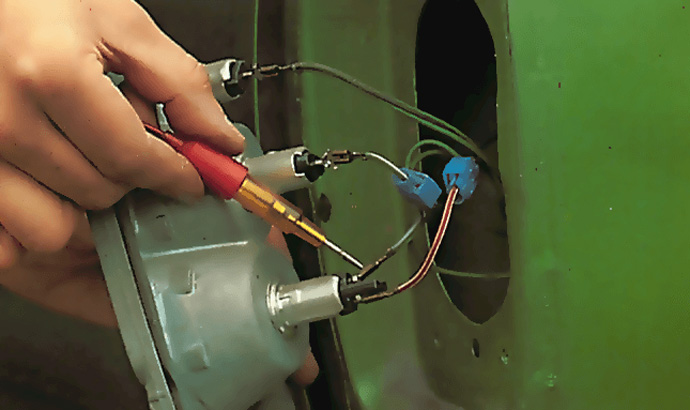
A competent electrical repair begins with a digital multimeter, not a visual inspection. The technician checks for voltage at the fuse, then at the socket, then tests the ground for continuity. This sequence systematically isolates the break in the circuit without replacing parts speculatively. Our team strongly recommends that anyone authorizing this repair ask to see the test results — a responsible shop documents which component tested out of spec before ordering parts. Shops that skip the multimeter work and immediately recommend socket kits or harness replacements are not diagnosing the problem, they are guessing at it.
The Actual Repair
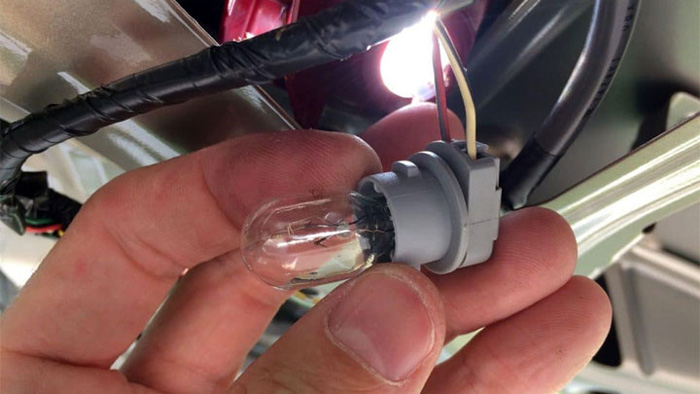
Once the fault is located, the repair matches the specific problem. A corroded ground wire gets cleaned with a wire brush, re-terminated with a proper ring terminal, and secured to clean bare metal. A damaged socket receives a new pigtail connector, spliced in using weatherproof butt connectors and sealed with heat-shrink tubing. Chafed wiring is re-insulated or replaced with a matching gauge wire and covered with split loom. A damaged section of the main harness gets a splice repair or, in cases with extensive damage, a used or aftermarket harness replacement.
Warning: Twist-and-tape wire splices are not an acceptable repair for exterior lighting — moisture infiltrates the connection and causes repeat failures within months, often voiding any warranty the shop offered.
Quick Checks That Can Reduce the Repair Bill
Self-Checks Worth Doing Before Calling a Shop
Before anyone pays a diagnostic fee, a few basic checks are worth completing. Start with the fuse box — a blown tail light fuse is a one-dollar fix that takes two minutes. Next, inspect the bulb itself for a broken filament. Our guide covering why brake lights work but tail lights don't walks through exactly this kind of systematic inspection, and it explains why the two circuits run separately — context that helps narrow down the fault before a mechanic gets involved. After the fuse and bulb, visually check the connector at the back of the tail light housing. A loose connector or visible green oxidation can sometimes be resolved by reseating the plug and applying electrical contact cleaner, avoiding the diagnostic fee entirely.
Parts vs. Labor: Where the Money Goes
The actual parts in most tail light wiring repairs are inexpensive. Connectors, terminals, socket pigtails, and wire are commodity items. Labor is where the bill grows. A shop billing at $100 per hour might spend 30 minutes on a ground repair or three hours tracing a complex harness fault in a modern vehicle with multiple splices. The table below shows what most people pay across the full range of tail light wiring repairs.
| Repair Type | Parts Cost | Labor Estimate | Total Range |
|---|---|---|---|
| Blown fuse replacement | $1–$5 | $0 (DIY) | $1–$5 |
| Bulb or socket replacement | $5–$20 | $30–$60 | $35–$80 |
| Corroded ground wire repair | $5–$15 | $40–$80 | $45–$95 |
| Socket pigtail splice | $10–$30 | $50–$120 | $60–$150 |
| Wiring harness section splice | $20–$80 | $100–$250 | $120–$330 |
| Full harness replacement | $60–$200 | $150–$300 | $210–$500 |
| Body control module replacement | $200–$700 | $100–$200 | $300–$900 |
Professional Standards That Ensure a Lasting Repair
Choosing the Right Shop
Not every shop handles automotive electrical work at the same level. Our team's research consistently shows that independent shops with a dedicated electrical technician outperform dealership service departments on both quality and price for tail light wiring work. The key credential to look for is ASE certification in electrical/electronic systems (test area A6). An ASE-certified technician understands circuit theory, uses proper crimping tools, and applies weatherproof connectors — producing a repair that holds up. Shops that rely on tape-and-twist splices or that quote harness replacement without a documented diagnostic are warning signs worth heeding.
Parts Quality and Repair Warranty
Cheap aftermarket connectors and terminals corrode faster than OEM-quality components, creating repeat failures within a year or two. Our team recommends specifying OEM-grade or quality-tier aftermarket parts when authorizing a tail light wiring repair — the price difference is minor, and the longevity difference is significant. Just as understanding the signs of electrical wear matters when assessing whether a car spark plug needs replacing, it applies to wiring components that degrade with heat and moisture over time. Any reputable shop stands behind electrical work with at least a 90-day parts and labor warranty. Asking for this upfront filters out shops that aren't confident in their own work.
Pro insight: OEM-grade socket pigtails from a dealership parts counter typically cost only $5 to $15 more than bargain-bin alternatives, and they fit without modification — a worthwhile upgrade for any splice repair.
Insider Tips for Getting the Most From a Wiring Repair
Always Ask for an Itemized Estimate
An itemized estimate separates parts costs from labor costs, revealing whether a shop is marking up components significantly or padding hours. Our team considers this standard practice for any automotive electrical repair over $100. The estimate should list each component by part number and show the hourly rate with estimated time. If a shop provides only a lump-sum total, requesting the breakdown is reasonable — and the response tells a lot about the shop's transparency. A shop that refuses to itemize is a shop that benefits from the opacity.
Recognizing and Avoiding Common Upsells
A tail light wiring visit is a common opportunity for shops to recommend unrelated repairs. Our team advises focusing strictly on the fault confirmed by the documented diagnostic. If the issue is a corroded ground wire and the shop recommends BCM replacement without proof of BCM failure on the diagnostic printout, that's a red flag. Similarly, recommending a full harness replacement when only a six-inch section of wire is damaged is rarely justified — a quality splice is the correct repair in that scenario. Getting a second opinion from another ASE-certified shop is always a reasonable response to a quote that feels inflated relative to the confirmed fault.
Frequently Asked Questions
How much does tail light wiring repair cost on average?
Most tail light wiring repairs fall between $50 and $300. Simple fixes like a blown fuse or corroded ground wire sit at the low end, while harness replacements or body control module faults push the total toward $300 to $900. The diagnostic fee — typically $50 to $120 — is usually applied toward the repair total at reputable shops.
Can a bad ground wire cause tail lights to stop working entirely?
Yes. A broken or corroded ground wire is one of the most common causes of complete tail light failure. Without a proper ground path, the circuit cannot complete and the bulb will not illuminate regardless of whether the bulb, fuse, and power supply are all functioning correctly. Ground repairs are typically among the least expensive wiring fixes available.
How long does a tail light wiring repair take?
Simple repairs — blown fuse, corroded ground, loose connector — take 30 minutes to an hour including diagnosis. A socket pigtail splice runs one to two hours. Harness section repairs or full harness replacements can take two to five hours depending on the vehicle's layout and how accessible the wiring is. BCM diagnosis and replacement adds additional time for programming.
Is it legal to drive with a broken tail light?
In virtually every U.S. state, driving with a non-functional tail light is a moving violation subject to a fine. Beyond the legal exposure, a dark tail light significantly increases rear-end collision risk in nighttime or low-visibility driving conditions. Our team recommends treating a failed tail light as an urgent repair, not a deferred maintenance item.
Can the tail light wiring repair be done at home?
Simple repairs — fuse replacement, bulb swap, connector reseating, or a clean ground wire re-termination — are within the reach of anyone comfortable with basic tools and a multimeter. More complex harness repairs or any fault that involves the body control module require professional diagnostic equipment and should be handled by an ASE-certified technician to avoid creating additional faults.
Does car insurance cover tail light wiring repair costs?
Standard liability and collision policies do not cover maintenance or electrical wear repairs. Comprehensive coverage may apply if the wiring damage was caused by a covered event — such as rodent damage, fire, or flood — but a deductible typically applies. Most tail light wiring repairs fall below the average deductible, making an out-of-pocket repair the practical choice in most situations.
Key Takeaways
- The tail light wiring repair cost ranges from $50 to $300 for most vehicles, with BCM-related faults capable of exceeding $900 — a corroded ground wire or blown fuse is typically the cheapest and most common fix.
- A documented multimeter diagnostic is the non-negotiable first step in any legitimate tail light wiring repair, and our team recommends requesting the test results before authorizing any parts replacement.
- Self-checks on the fuse, bulb, and connector can eliminate the need for a shop visit entirely, and understanding the separate brake light and tail light circuits helps narrow down the fault quickly.
- An itemized estimate, OEM-grade parts, and a 90-day repair warranty are the three benchmarks our team uses to distinguish a quality shop from one that will create repeat problems.


About Chris Lewis
Chris Lewis developed a deep knowledge of automotive filtration, maintenance, and repair through years of hands-on experience working on vehicles — a passion rooted in time spent in his father's San Francisco auto shop from an early age. He has practical familiarity with air, oil, fuel, and cabin filter systems across a wide range of vehicle makes and models, along with experience evaluating the tools and equipment that serious DIY mechanics rely on. At MicrogreenFilter, he covers automotive and motorcycle filter reviews, maintenance guides, and automotive tool recommendations.
Get FREE Filters now. Or latest free tools from our best collections.
Disable Ad block to get all the secrets. Once done, hit any button below