Walkie Talkie vs CB Radio vs Ham Radio: Key Differences Explained
by Chris Lewis
When you compare a walkie talkie vs CB radio ham radio, the short answer is this: walkie talkies are cheap and simple, CB radios work best for road communication, and ham radios offer the most power and range. Each one serves a different purpose. Picking the right radio depends on how far you need to talk, where you'll use it, and how much effort you want to put in. Whether you're on the highway, out on a trail, or prepping for emergencies, your choice of radio matters. Check out our full radios category for more gear guides and comparisons.
All three radios use different frequencies, power levels, and rules. That creates big differences in range, cost, and who can use them. A walkie talkie might reach a mile or two. A CB radio can hit 5–15 miles. A ham radio can bounce signals across the planet. But more range means more complexity and often more money.
This guide breaks down every key difference. You'll learn what each radio does best, what it costs, and which one fits your situation. If you've already explored shortwave radio vs ham radio, this post fills in the rest of the picture.
Contents
- What Are These Radios and How Do They Differ?
- Cost and Budget Breakdown for Each Radio Type
- Walkie Talkie vs CB Radio Ham Radio: Beginner or Advanced?
- When to Use Each Radio (and When Not To)
- Common Radio Buying Mistakes and How to Dodge Them
- Fixing Common Radio Signal Problems
- Building Your Radio Setup Over Time
- Final Thoughts
What Are These Radios and How Do They Differ?
Before you spend money, you need to understand what makes each radio type unique. They differ in frequency bands, power output, range, and legal requirements. Here's the breakdown.
Walkie Talkie Basics
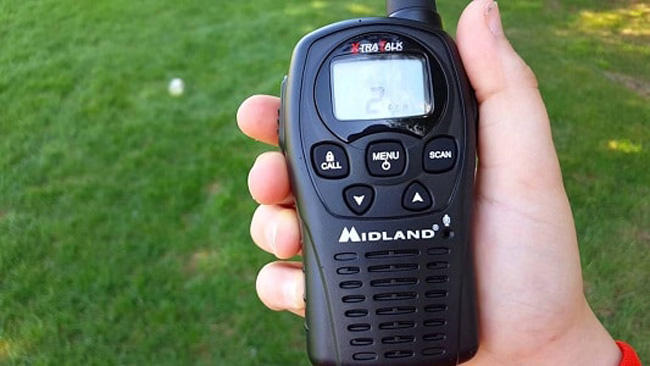
Walkie talkies typically operate on FRS (Family Radio Service) or GMRS (General Mobile Radio Service) frequencies. They're handheld, battery-powered, and designed for short-range communication.
- Frequency: UHF (462–467 MHz)
- Power: 0.5–5 watts depending on model and service
- Range: 0.5–2 miles in most real-world conditions
- License: none for FRS; GMRS requires an FCC license ($35, no exam)
- Best for: hiking, camping, short-distance vehicle convoys
Most consumer walkie talkies are plug-and-play. Turn them on, pick a channel, and talk. No programming needed.
CB Radio Basics
CB (Citizens Band) radio has been a staple for truckers and road travelers for decades. It operates on the 27 MHz band with 40 channels.
- Frequency: HF (26.965–27.405 MHz)
- Power: 4 watts AM, 12 watts SSB
- Range: 3–15 miles typical; sometimes more with SSB
- License: none required in the US
- Best for: highway driving, off-roading, truck convoys
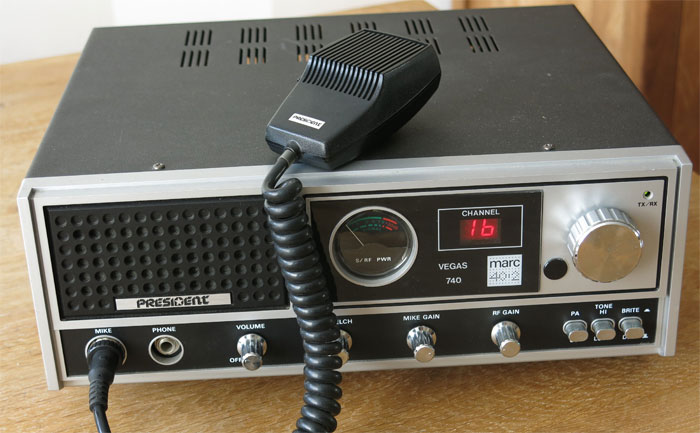
CB radios can be handheld or vehicle-mounted. The mounted versions with external antennas perform much better. Channel 19 is the standard trucker channel. Channel 9 is for emergencies.
Ham Radio Basics
Ham (amateur) radio covers a wide range of frequencies and offers the most power and flexibility of all three options. It's also the most complex.
- Frequency: HF, VHF, UHF (1.8 MHz to 1300 MHz+)
- Power: up to 1,500 watts (depending on license class)
- Range: local to worldwide
- License: required — Technician, General, or Extra class (FCC exam required)
- Best for: emergency communication, long-range contact, hobbyists
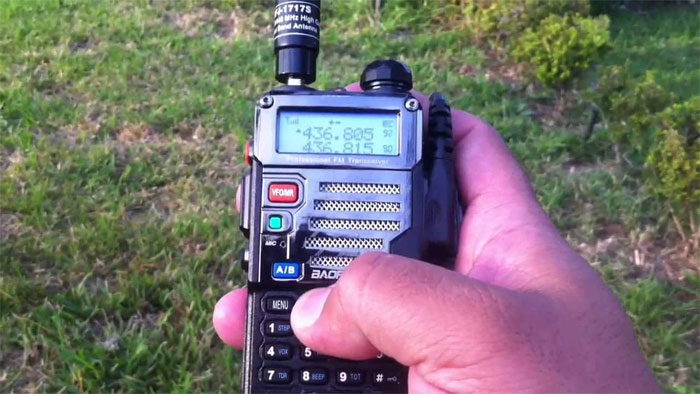
Ham radios can talk across town or across the world using repeaters and atmospheric skip. But you need to pass a test and get a callsign before you transmit.
Cost and Budget Breakdown for Each Radio Type
Budget often drives the decision. Here's what you can expect to spend on each radio type, from the bare minimum to a solid setup.
Upfront Costs
| Feature | Walkie Talkie (FRS/GMRS) | CB Radio | Ham Radio |
|---|---|---|---|
| Entry-level unit | $20–$50 (pair) | $40–$80 | $25–$100 (handheld) |
| Mid-range unit | $60–$120 (pair) | $100–$200 | $200–$500 (mobile) |
| Antenna (external) | Not typical | $20–$80 | $30–$200+ |
| License fee | $0 (FRS) / $35 (GMRS) | $0 | $35 (FCC exam fee) |
| Mounting hardware | None needed | $10–$30 | $10–$50 |
| Typical total (starter) | $20–$60 | $70–$150 | $90–$350 |
Walkie talkies win on price. CB radios sit in the middle. Ham radios cost more upfront but give you far more capability per dollar.
Ongoing and Hidden Costs
Don't just look at the sticker price. Think about what you'll spend over time.
- Batteries — walkie talkies burn through batteries fast. Rechargeable packs help but add $10–$20.
- CB antennas — a cheap antenna limits your range. Budget $40–$60 for a decent fiberglass whip.
- Ham upgrades — once you start, you'll want better antennas, tuners, and possibly a base station. This can run $500–$2,000+.
- SWR meter — essential for CB and ham setups. Costs $20–$50. Skipping it can damage your radio.
- Coax cable — cheap coax loses signal. RG-8X or LMR-240 runs $0.50–$1.50 per foot.
The cheapest option to own long-term is a walkie talkie. CB is affordable too. Ham radio gets expensive if you go deep into the hobby.
Walkie Talkie vs CB Radio Ham Radio: Beginner or Advanced?
Your experience level matters. Some radios you can use out of the box. Others take weeks of study and practice.
The Learning Curve
- Walkie talkie — zero learning curve. Pick it up, press the button, talk. Kids can use them.
- CB radio — slight learning curve. You need to mount it, tune the antenna (SWR), and learn basic etiquette. Most people figure it out in an afternoon.
- Ham radio — steep learning curve. You must study radio theory, regulations, and operating procedures. The Technician exam has 35 questions. Study time is typically 10–20 hours.
If you've never touched a radio before, start with a walkie talkie or CB. Ham radio rewards patience, but it demands more commitment upfront.
Licensing Requirements
Here's a quick breakdown of who needs what:
- FRS walkie talkies — no license, no registration, no paperwork. Completely open.
- GMRS walkie talkies — requires an FCC GMRS license. Costs $35 and covers your entire family. No exam needed.
- CB radio — no license required since 1983. Just buy one and start talking.
- Ham radio — requires passing an FCC exam. Three license tiers exist: Technician (VHF/UHF), General (adds HF bands), and Extra (all bands). Each level opens more frequencies and power.
If licensing feels like a barrier, CB radio gives you the best range without any paperwork. GMRS is a good middle ground — more power than FRS with a simple application.
When to Use Each Radio (and When Not To)
Every radio has a sweet spot. Using the wrong radio for the job leads to frustration. Here's when each one shines and when you should skip it.
Best Scenarios for Each
Use a walkie talkie when:
- You're hiking, camping, or at an outdoor event
- You need communication within 1–2 miles
- You want something lightweight and disposable
- You're coordinating a small group (family road trip, work site)
Use a CB radio when:
- You're driving long distances on highways
- You need traffic and road condition updates from truckers
- You're part of an off-road convoy or overland group
- You want license-free communication with decent range
Use a ham radio when:
- You need communication during natural disasters or emergencies
- You want to talk beyond 15 miles
- You're interested in radio as a hobby or skill
- You need reliable communication in remote areas with repeater access
Just like choosing between synthetic winch rope and steel cable, the right pick depends on your specific situation rather than which one is "best" overall.
When a Radio Type Is a Poor Fit
- Don't use a walkie talkie for highway driving. The range is too short and you'll lose contact fast.
- Don't use a CB radio for backpacking. Handheld CB units exist but they're bulky and the antenna length makes them impractical.
- Don't use a ham radio if you just want to chat with your buddy in the next car. It's overkill, and you need a license.
Match the tool to the task. Overbuying wastes money. Underbuying leaves you without signal when you need it most.
Common Radio Buying Mistakes and How to Dodge Them
People make the same mistakes over and over when shopping for radios. Here's how to avoid the biggest ones.
Trusting Range Claims on the Box
This is the number-one trap. A walkie talkie box might say "35-mile range." That's tested in perfect conditions — flat terrain, no buildings, no trees, no interference. In reality, you'll get a fraction of that.
- FRS walkie talkies: advertised 20–35 miles, real-world 0.5–2 miles
- GMRS handhelds: advertised 30–50 miles, real-world 2–5 miles
- CB radio: advertised 10–20 miles, real-world 3–10 miles
- Ham handheld: advertised varies, real-world 2–15 miles (or more with repeaters)
Always divide the advertised range by at least 5 for a realistic estimate. Better yet, read real user reviews from people in similar terrain.
Picking the Wrong Radio for Your Use Case
Other common mistakes that cost you time and money:
- Buying a ham radio before getting your license — you can listen, but transmitting without a license is illegal and carries fines up to $100,000.
- Skipping the external antenna on a CB — the rubber duck antenna on a handheld CB is nearly useless. A proper vehicle-mounted antenna doubles or triples your range.
- Ignoring SWR tuning — a mismatched antenna reflects power back into your radio. This damages the transmitter over time. Always check SWR before regular use.
- Buying the cheapest option — a $15 walkie talkie pair from a discount bin will frustrate you. Spend a little more for reliable performance.
- Forgetting about power supply — mobile CB and ham radios draw 3–8 amps. Make sure your vehicle's electrical system can handle it, especially if you've added other accessories.
Fixing Common Radio Signal Problems
You bought the radio, set it up, and the signal is terrible. Before you blame the radio, check these common issues.
Poor Reception and Dead Zones
Weak signals usually come down to a few fixable problems:
- Antenna placement — mount your antenna as high as possible. For vehicle setups, the center of the roof is ideal. Mag-mount antennas on the trunk lid work but give weaker performance.
- Coax connections — check every connector. A loose or corroded PL-259 fitting drops your signal fast. Clean contacts with electronics cleaner.
- Terrain and buildings — radio waves travel in straight lines at VHF/UHF frequencies. Hills, buildings, and dense forest block them. Move to higher ground or an open area.
- Battery level — a dying battery weakens your transmit power. Rechargeable walkie talkie packs drop voltage gradually. Fresh batteries make a noticeable difference.
- Channel congestion — if a channel is crowded, switch to a less popular one. On CB, channels 17 and 21 are often quieter than channel 19.
If you're also struggling with AM reception in your vehicle, our guide on how to improve AM radio reception covers antenna tips that apply to all radio types.
Dealing with Interference
Interference comes from many sources. Here's how to track it down:
- Engine noise — alternator whine or ignition noise bleeds into CB and ham radios. Install a noise filter ($10–$25) on the power line. Ferrite chokes on the coax help too.
- LED lights — cheap LED light bars and headlights generate radio frequency interference (RFI). Swap to shielded LEDs or add ferrite cores to their wiring.
- Other electronics — phone chargers, dash cams, and inverters all produce noise. Unplug them one at a time to find the culprit.
- Adjacent channel bleed — on CB, a powerful station on channel 18 can bleed into channel 19. An RF gain adjustment on your radio can help.
Most interference problems have simple, cheap fixes. Start with the power line and work outward.
Building Your Radio Setup Over Time
You don't need to buy everything at once. A smart approach is to start small and upgrade as your needs grow.
Start Simple and Scale Up
Here's a practical progression that many radio users follow:
- Start with FRS walkie talkies — get a pair for $25–$40. Use them on trips and around the property. Learn the basics of radio etiquette and channel selection.
- Add a CB radio to your vehicle — install a mobile CB with a proper antenna. This gives you highway communication and emergency access on channel 9. Budget $100–$150 total.
- Study for your ham Technician license — free study resources exist online. The exam costs $35. Pass it and you unlock VHF/UHF ham bands with far more power and repeater access.
- Buy a ham handheld (HT) — a Baofeng or Yaesu handheld costs $25–$60. Program local repeater frequencies and you'll have reliable communication across your metro area.
- Upgrade to a mobile ham rig — a 50-watt mobile unit ($150–$400) mounted in your vehicle gives you serious range. Add a quality antenna and you're set for years.
This progression spreads costs over months or years. Each step builds on the last.
Vehicle Integration Tips
Installing radios in your vehicle takes some planning. Keep these tips in mind:
- Wire directly to the battery — don't tap into accessory circuits. Use an inline fuse within 18 inches of the battery terminal.
- Route coax carefully — keep coax away from power wires and spark plug leads. Cross at 90-degree angles if you must.
- Ground your antenna mount — a mag-mount needs a good ground plane. Clean the paint off mounting points for permanent mounts.
- Use a mounting bracket — don't just set the radio on the seat. A proper dash or console mount keeps it accessible and safe.
- Plan for multiple radios — if you want both CB and ham, use separate antennas spaced at least 3 feet apart. Shared antennas with splitters cause problems.
Good installation makes all the difference. A poorly mounted radio with a bad antenna will always underperform, no matter how expensive the unit.

Final Thoughts
Now you know the real differences between walkie talkies, CB radios, and ham radios. The best way to decide is to think about your actual use — how far you need to communicate, whether you want to deal with licensing, and what you're willing to spend. If you're still unsure, grab an affordable pair of FRS walkie talkies and a budget CB radio, try both on your next road trip, and see which one earns a permanent spot in your vehicle.


About Chris Lewis
Chris Lewis developed a deep knowledge of automotive filtration, maintenance, and repair through years of hands-on experience working on vehicles — a passion rooted in time spent in his father's San Francisco auto shop from an early age. He has practical familiarity with air, oil, fuel, and cabin filter systems across a wide range of vehicle makes and models, along with experience evaluating the tools and equipment that serious DIY mechanics rely on. At MicrogreenFilter, he covers automotive and motorcycle filter reviews, maintenance guides, and automotive tool recommendations.
Get FREE Filters now. Or latest free tools from our best collections.
Disable Ad block to get all the secrets. Once done, hit any button below