A fiberglass tonneau cover costs between $800 and $2,500 — and that range is the first thing you need to know. The exact fiberglass tonneau cover cost you'll pay depends on brand, finish type, and whether you include professional installation. These are not interchangeable products. A color-matched premium cover from LEER or A.R.E. is a fundamentally different product from a gel-coat budget lid, even if both are technically made of fiberglass. If you're investing in serious automotive upgrades for your truck, understanding what drives the price keeps you from overspending on marketing or underspending on quality.
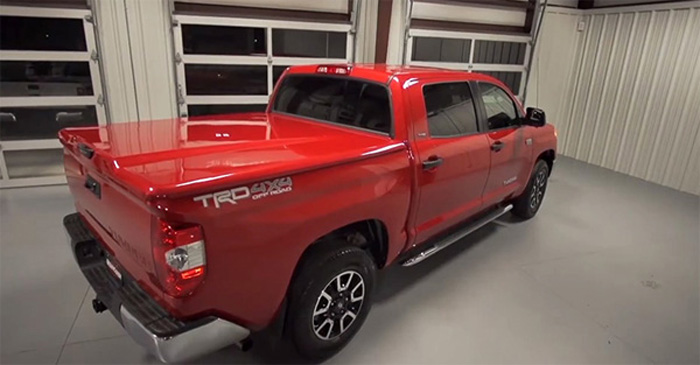
The challenge most buyers run into is that prices look similar on a spec sheet but the actual products are miles apart. A $900 off-brand cover might seal adequately for a couple of years before the paint starts peeling and the seals dry out. A $1,600 LEER cover installed correctly can outlast the truck it's on. That cost difference isn't markup — it's engineering, materials, and a warranty that actually means something.
This guide covers every factor that drives the fiberglass tonneau cover cost up or down: construction quality, brand tier, finish options, installation fees, and the common mistakes that end up costing buyers more than they expected. By the time you finish reading, you'll know exactly what your money buys at every price point.
Contents
- What Makes Fiberglass Tonneau Covers Different
- Fiberglass Tonneau Cover Cost: What Buyers Actually Pay
- Installation: What It Takes and What It Costs
- Caring for Your Cover to Protect What You Paid For
- How to Cut Costs Without Cutting Corners
- Mistakes That Drive Up Your Total Cost
- What People Get Wrong About Fiberglass Tonneau Covers
- Frequently Asked Questions
- Key Takeaways
What Makes Fiberglass Tonneau Covers Different
Construction and Materials
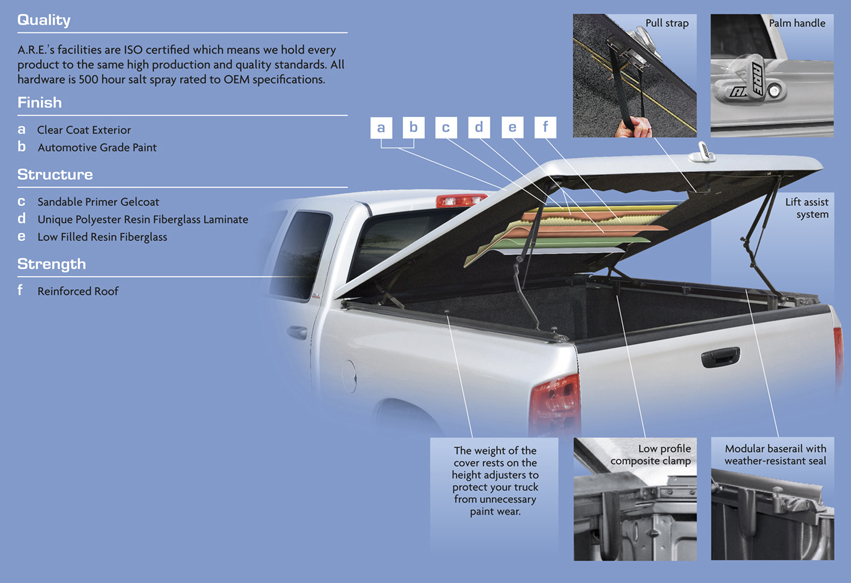
Fiberglass tonneau covers are molded from chopped strand or woven fiberglass cloth, then finished with a gel coat or automotive-grade paint. The result is a shell that is rigid, weather-resistant, and far more durable than any soft cover on the market. Unlike aluminum or steel, fiberglass doesn't dent from minor impacts — it can crack under extreme force, but a glancing blow from a tree branch or parking structure leaves no mark at all. The surface behaves like a body panel because it essentially is one.
The finish is what separates entry-level from premium. A gel coat looks decent out of the box but won't match your truck's factory color. A color-matched automotive finish uses your truck's OEM paint code and blends the cover seamlessly into the body. That upgrade runs $200–$400 more at purchase, but it's the difference between a cover that looks aftermarket and one that looks like it came from the factory.
How Fiberglass Compares to Other Cover Types
Soft roll-up covers run $200–$500. Hard folding panels run $500–$1,200. According to Wikipedia's overview of tonneau covers, the concept of covering the rear cargo area of a vehicle dates back to early automotive history — and the modern fiberglass lid represents the premium evolution of that idea. Fiberglass one-piece lids sit at the top of the market for good reason: they offer the best cargo security, the cleanest profile, and the longest lifespan of any cover type. You're not just buying a lid. You're buying a structural component that stays on your truck for a decade or more.
Fiberglass Tonneau Cover Cost: What Buyers Actually Pay
Budget Range ($800–$1,200)
At the lower end, you'll find one-piece lids with a primer or basic gel coat finish. These covers do the essential job — they're rigid, they seal the bed, and they handle daily weather. But fitment tolerances are looser, seals wear faster, and color matching isn't usually an option. You're essentially buying the shape and material without the refinement. If you need a functional cover on a tight budget, this tier works. Just expect to replace the seals within a few years and plan for some touch-up work on the finish.
Mid-Range ($1,200–$1,800)
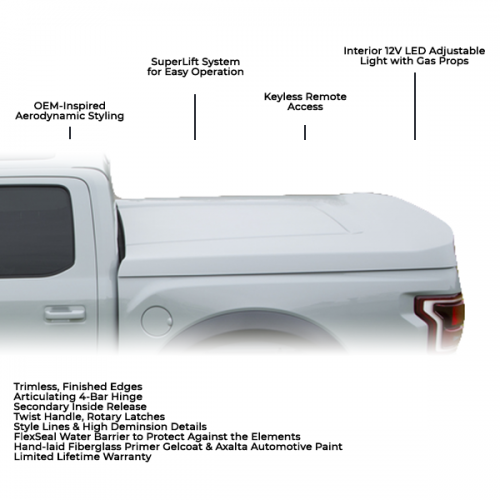
This is where most buyers land, and for good reason. Mid-range fiberglass covers from LEER and A.R.E. offer tighter fitment, better weather sealing, and factory color-match options. You also get better hinge systems, integrated spoilers, and lock cylinders built to last. The LEER 550 sits squarely in this tier and remains one of the most popular fiberglass covers available. At this price point, you're paying for engineering, not just material — and the difference shows in how the cover fits and feels after five years.
Premium Range ($1,800–$2,500+)
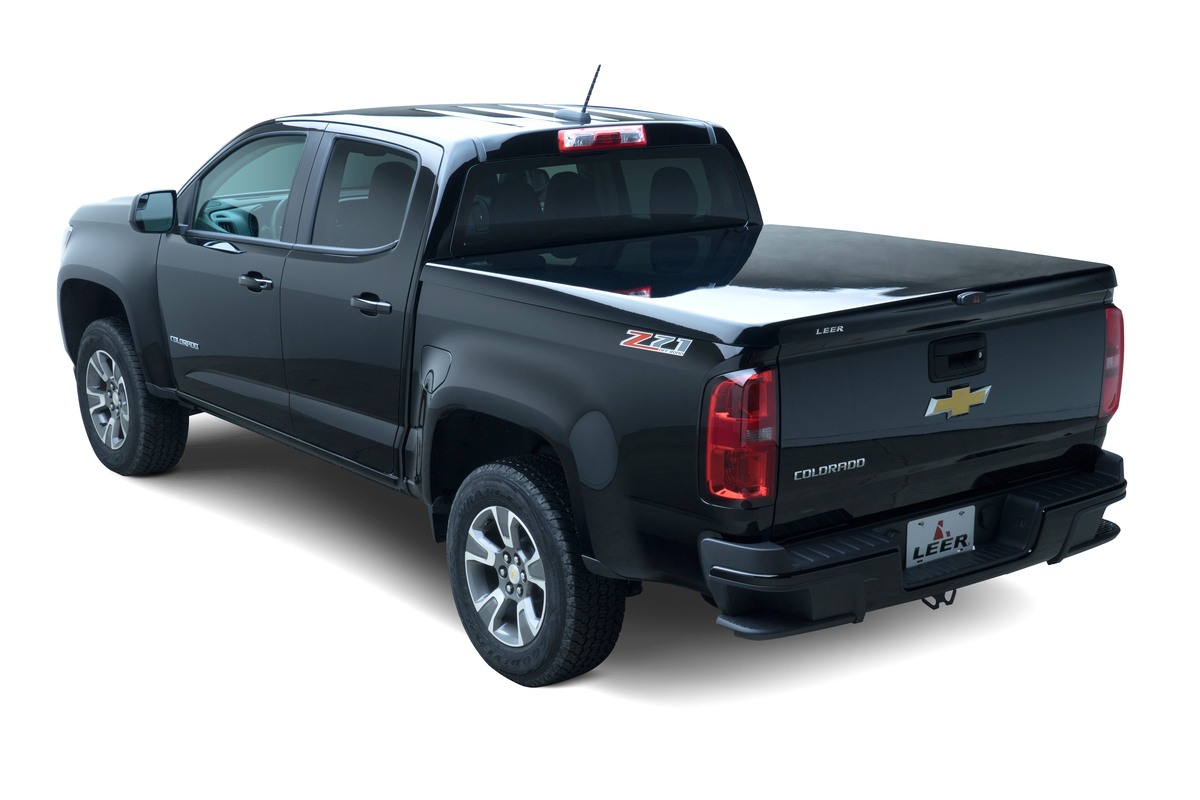
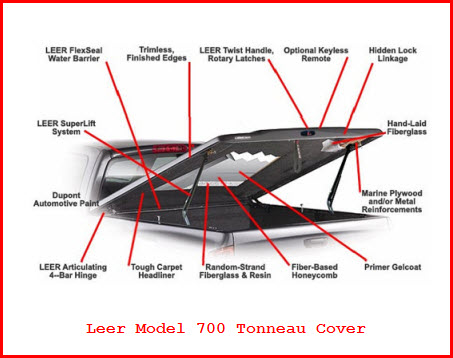
At the top end, you're buying a cover that looks factory-installed. The A.R.E. LSII, LEER 700, and LEER 750 Sport use color-matched automotive paint, flush-mount hardware, and seals engineered to keep moisture and road dust completely out of your bed. These covers are built to exact tolerances for specific truck models. If you regularly haul tools, electronics, or gear that can't get wet, this is the tier to buy. The premium fiberglass tonneau cover cost reflects real engineering, not just brand prestige.
| Brand / Model | Style | Finish Options | Typical Price Range |
|---|---|---|---|
| LEER 550 | One-piece flush | Gel coat, color-match | $1,200–$1,600 |
| LEER 700 | One-piece sport | Color-match | $1,500–$1,900 |
| LEER 750 Sport | One-piece sport | Color-match, glass rear window | $1,700–$2,100 |
| A.R.E. LSII | One-piece flush | Gel coat, color-match | $1,400–$1,800 |
| A.R.E. Z Series | Sport profile | Color-match | $1,800–$2,300 |
| Generic / Off-brand | One-piece | Primer or gel coat only | $800–$1,100 |
Installation: What It Takes and What It Costs
DIY vs. Professional Installation
A fiberglass tonneau cover is not a plug-and-play accessory. The average one-piece lid weighs 60 to 90 pounds, and you need at least one other person to lift it safely onto the bed rails. Professional installation at a truck accessory dealer typically runs $150–$400, and most dealers include it when you buy the cover directly from them. That bundled deal is usually worth taking. Misalignment during installation is the leading cause of seal failure — a professional who installs these covers daily gets it right the first time.
Pro tip: Always purchase your fiberglass tonneau cover from a dealer who installs it on-site — if the fitment is off, they're responsible for correcting it at no extra charge.
What You Need for a DIY Job
If you own the cover and want to install it yourself, you'll need a torque wrench, rubber mallet, tape measure, and the mounting hardware included with the cover. Most modern fiberglass covers use clamp-style bed rail mounts that don't require drilling. Budget three to four hours and recruit a second person — there's no practical way to align a 75-pound fiberglass shell by yourself. If you're comfortable doing methodical mechanical work on your truck, the way you might approach a job like choosing between bottle jacks vs. floor jacks for proper vehicle support, a DIY install is manageable with patience.
Caring for Your Cover to Protect What You Paid For
Cleaning and Waxing
A color-matched fiberglass cover is essentially a body panel — treat it like one. Wash it with a pH-neutral automotive soap, dry it completely to prevent water spots, and apply a quality paste wax or ceramic coating every few months. The same principles that apply to protecting any painted exterior surface apply here. If you want a deeper understanding of how automotive finishes respond to different protective products, our breakdown of car wrap vs. car paint covers the fundamentals of finish care that translate directly to maintaining a fiberglass tonneau cover. A properly waxed cover holds its color and gloss for years longer than a neglected one.
Seal Maintenance
The rubber seals along the perimeter of a fiberglass cover do the actual waterproofing work. Treat them with a silicone-based conditioner twice a year — it keeps the rubber pliable and prevents cracking and shrinkage. If you notice water infiltrating your truck bed after heavy rain, a dried-out or compressed seal is almost always the cause. Replacing a worn seal runs $30–$80 in parts and takes about an hour. It's the cheapest maintenance task on the cover, and skipping it leads to the most expensive repairs.
How to Cut Costs Without Cutting Corners
Timing Your Purchase
Truck accessory dealers run meaningful promotions around new model year launches, end of summer, and holiday windows. During these periods, you can realistically find fiberglass covers discounted 10–20% off retail. If you're flexible on color and willing to accept a gel coat finish instead of color-match, dealer floor models often sell at a significant discount. Buying a prior-model-year cover in the same trim level saves $200–$400 with zero sacrifice in quality — the fiberglass manufacturing process doesn't change year to year.
Negotiating Installation
When buying from a local dealer, installation is almost always negotiable. Ask them to include labor before agreeing to any price. Most dealers will absorb installation cost on a $1,500+ cover sale rather than lose the deal to a competitor. Also confirm the warranty on both the cover and the installation work — a reputable shop stands behind both. If you use your truck for hauling or towing, it's worth thinking about how your accessories work together as a system; our guide to tow strap vs. recovery strap differences is a useful reference for understanding how truck bed gear and recovery equipment interact.
Mistakes That Drive Up Your Total Cost
Skipping Fitment Research
Not every fiberglass cover fits every truck. Bed length, bed width, and cab configuration all matter. Ordering a short-bed cover for a standard-bed truck — or vice versa — means a return, a restocking fee of $50–$150, and weeks of waiting for a replacement. Always verify your exact bed dimensions using your owner's manual or measuring tape before ordering anything. The fitment pages on manufacturer websites require your year, make, model, and bed length — fill in every field, not just the obvious ones.
Ignoring Total Cost of Ownership
A $900 off-brand cover that needs new seals after two years and begins delaminating at year four costs more over a decade than a $1,600 LEER cover with a five-year warranty. Think in 10-year terms, not sticker price. Premium fiberglass covers from established brands carry 3–5 year material and finish warranties — that's real financial protection. The budget option might look attractive at checkout, but the math usually reverses itself within three to five years of ownership.
What People Get Wrong About Fiberglass Tonneau Covers
Myth: Fiberglass Covers Are Too Heavy for Daily Use
This comes from outdated thinking. Modern fiberglass covers use gas struts and damped hinges engineered to make opening a 70-pound lid a one-finger operation. You press the release latch, lift slightly, and the strut does all the work. Some premium covers offer powered or remote-open mechanisms. Weight stopped being a practical daily-use barrier years ago — the engineering fully compensates for it. If you've handled a modern tonneau cover at a dealer, you already know this firsthand.
Myth: All Tonneau Covers Offer the Same Protection
This is straightforwardly false. A soft roll-up cover can be cut open with a utility knife in seconds. A fiberglass hard cover with a quality cylinder lock requires significantly more time and effort to defeat. If you're carrying tools, electronics, or anything valuable in your truck bed, the security gap between a soft cover and a fiberglass lid is substantial. The higher fiberglass tonneau cover cost buys you measurably better cargo security — that's not a marketing claim, it's a physical reality.
Frequently Asked Questions
How much does professional installation add to the fiberglass tonneau cover cost?
Professional installation at a truck accessory dealer typically runs $150–$400. Many dealers bundle installation at no charge when you purchase the cover from them directly, so always ask before agreeing to a price — it's almost always negotiable on a $1,200+ purchase.
Is a fiberglass tonneau cover worth the higher cost compared to a soft cover?
Yes, if security, appearance, and longevity matter to you. Fiberglass covers deliver better cargo security, a cleaner integrated look, and a lifespan that regularly exceeds ten years with basic maintenance. The higher upfront cost pays off clearly over a full ownership period.
Do fiberglass tonneau covers actually improve fuel economy?
Yes, modestly. Independent testing shows fiberglass tonneau covers improve highway fuel economy by roughly 1–3 MPG by reducing aerodynamic drag over the open truck bed. The effect is most noticeable at sustained highway speeds above 60 MPH.
Can a fiberglass tonneau cover be painted to match a new truck color?
Yes. Most premium brands offer factory color-match paint specified by your truck's OEM paint code at the time of purchase. You can also have any fiberglass cover repainted by a qualified auto body shop if you buy used or change vehicles later.
How long does a fiberglass tonneau cover last?
A quality fiberglass cover from a reputable brand lasts 10–15 years with basic upkeep. The painted or gel-coated surface benefits from regular waxing, the seals need conditioner every six months, and the fiberglass shell itself is extremely durable under normal use.
Does a fiberglass tonneau cover reduce your truck bed's usable payload?
No. A fiberglass tonneau cover rests on the bed rails and does not reduce your truck's rated payload capacity. The cover's own weight — typically 60–90 pounds — adds to your gross vehicle weight, but has no effect on the cargo capacity of the bed itself.

Key Takeaways
- Fiberglass tonneau cover cost ranges from $800 to $2,500 depending on brand tier, finish type, and installation — color-matched premium covers from LEER or A.R.E. represent the best long-term value.
- Professional installation ($150–$400) is worth the cost and often negotiable when bundled with a cover purchase from a local dealer.
- Seal maintenance and periodic waxing are the two most important care habits that extend a fiberglass cover's lifespan well beyond a decade.
- Always verify your exact bed dimensions before ordering — a fitment mismatch leads to restocking fees, delays, and frustration that no amount of brand research prevents.


About Chris Lewis
Chris Lewis developed a deep knowledge of automotive filtration, maintenance, and repair through years of hands-on experience working on vehicles — a passion rooted in time spent in his father's San Francisco auto shop from an early age. He has practical familiarity with air, oil, fuel, and cabin filter systems across a wide range of vehicle makes and models, along with experience evaluating the tools and equipment that serious DIY mechanics rely on. At MicrogreenFilter, he covers automotive and motorcycle filter reviews, maintenance guides, and automotive tool recommendations.
Get FREE Filters now. Or latest free tools from our best collections.
Disable Ad block to get all the secrets. Once done, hit any button below