Over 80% of premature diesel engine failures trace back to contamination in the lubrication system — and your oil filter is the single component standing between clean oil and catastrophic wear. Whether you're running a Cummins in a Class 8 truck or a Powerstroke in your daily driver, the right diesel oil filter keeps abrasive particles, soot, and combustion byproducts from grinding down bearings, cam lobes, and cylinder walls. In 2026, filter media technology has advanced significantly, with synthetic-blend and micro-glass options offering filtration efficiencies above 99% for particles as small as 20 microns.
But not every diesel oil filter is built for the same job. A long-haul trucker logging 500,000 miles needs a different filter than someone running a farm tractor or a diesel pickup for weekend towing. Factors like filter media type, dirt-holding capacity, bypass valve pressure, and gasket construction all determine how well a filter protects your engine — and how long it lasts between changes. If you're also looking at cartridge-style oil filters, those are a different beast entirely from the spin-on designs we're covering here.
We've tested and evaluated seven of the top-rated diesel oil filters on the market in 2026, from heavy-duty fleet workhorses like the Fleetguard LF3349 to extended-performance options like the Mobil 1 M1-113A. Below, you'll find detailed reviews, a comparison table, and a buying guide to help you pick the right filter for your engine and driving conditions. For a broader look at diesel maintenance, check out our complete oil filter category.
Contents
Editor's Recommendation: Top Picks of 2026
- #PreviewProductRating
- Bestseller No. 1
 Rating:

- Bestseller No. 2
 Rating:
 - Bestseller No. 3
 Rating:
 - Bestseller No. 4
 Rating:
 - Bestseller No. 5
 Rating:
 - Bestseller No. 6
 Rating:
 - Bestseller No. 7
 Rating:
Our Hands-On Reviews
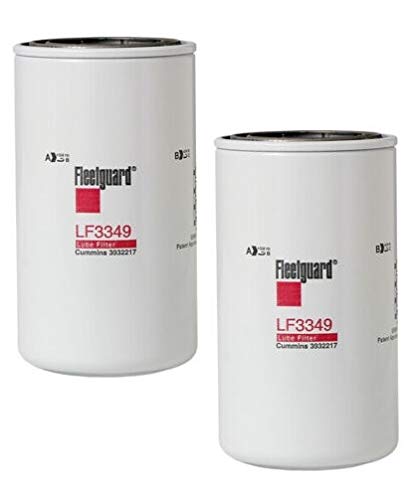
1. LF3349 Fleetguard Lube, Full-Flow Spin-On (Pack of 2) — Best for Cummins Diesel Fleets
If you run Cummins engines, the Fleetguard LF3349 is likely the filter your engine was designed around. Fleetguard is the filtration division of Cummins, which means this filter is essentially an OEM part — engineered to match the exact flow rates, bypass pressures, and media specifications that Cummins recommends. The two-pack makes it a practical buy for fleet operators or anyone who changes oil on a regular schedule.
The LF3349 features a full-flow spin-on design with an overall height of 176.28mm (6.94 inches) and a largest outer diameter of 93.12mm (3.666 inches). It directly replaces the Donaldson P558615 and Baldwin BT339, BT7339, and BT7349, giving you solid cross-reference flexibility. The gasket dimensions — 71.98mm OD with a 62.53mm inside diameter — ensure a tight, leak-free seal that holds up under the high oil pressures diesel engines generate.
Where this filter excels is in consistency. Every LF3349 coming off the line meets Cummins' own filtration standards, so you're not gambling on quality variation between batches. For owner-operators who keep meticulous maintenance logs, that predictability matters. The cellulose-synthetic blend media provides solid particulate capture without excessive flow restriction during cold starts — a real concern in northern climates.
Pros:
- OEM Cummins quality — designed specifically for Cummins diesel applications
- Two-pack offers value for scheduled maintenance intervals
- Wide cross-reference compatibility with Donaldson and Baldwin equivalents
- Reliable gasket seal under high oil pressure conditions
Cons:
- Application-specific — not a universal fit for non-Cummins engines
- Cellulose-blend media doesn't match pure synthetic filtration efficiency
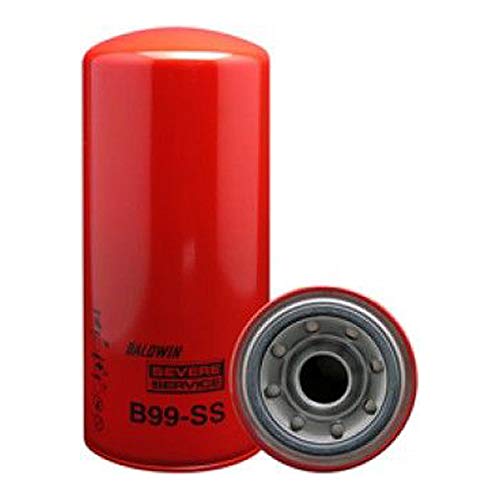
2. Baldwin Heavy Duty B99-SS Oil Filter, Spin-On — Best American-Made Heavy Duty Option
Baldwin Filters has been manufacturing heavy-duty filtration products in the United States for decades, and the B99-SS represents their commitment to domestic production quality. This spin-on oil filter is built for demanding diesel applications where you need a filter that can handle high soot loads and extended drain intervals without structural failure.
The "SS" designation in Baldwin's lineup indicates enhanced construction features. The filter canister is built to withstand the pressure spikes that diesel engines produce, particularly during cold starts when oil viscosity is at its highest. Baldwin's internal quality control is among the tightest in the industry, with every filter batch tested against their proprietary standards before leaving the factory.
For shops and fleet managers who standardize on Baldwin, the B99-SS fits into their broader product ecosystem. You can cross-reference it with confidence against competitive filters, and Baldwin's catalog makes it straightforward to find the right part number for your specific engine. The made-in-USA construction also matters for government contracts and municipal fleets that have domestic sourcing requirements.
Pros:
- Manufactured in the United States with strict quality controls
- Heavy-duty construction handles high-pressure diesel applications
- Strong aftermarket reputation among fleet maintenance professionals
Cons:
- Limited feature detail from the manufacturer compared to competitors
- Price point runs higher than some equivalent filters
3. Donaldson P550335 Lube Filter, Spin-On — Best Budget-Friendly Heavy Duty Filter
Donaldson is a name that carries serious weight in the commercial filtration world. The P550335 is one of their most widely used spin-on lube filters, found in everything from construction equipment to agricultural tractors to over-the-road trucks. At just 0.272 kg, it's a compact filter that packs reliable filtration into a lightweight package.
What sets Donaldson apart is their filtration engineering heritage. They've been solving contamination problems for industrial and heavy-duty applications since 1915, and that experience shows in the P550335's media design. The filter media is optimized to balance particle capture efficiency against flow restriction — a critical tradeoff in diesel applications where restricted oil flow can cause just as much damage as contaminated oil. According to the Society of Automotive Engineers, this balance between filtration and flow is one of the most important considerations in oil filter design.
If you maintain a mixed fleet with multiple engine brands, the P550335's broad application coverage makes it a practical stocking choice. You can reduce the number of unique filter part numbers in your inventory, which simplifies purchasing and reduces the risk of grabbing the wrong filter during a service. For the price, it delivers dependable protection that meets OEM specifications.
Pros:
- Trusted name in heavy-duty commercial filtration since 1915
- Lightweight and compact design at only 0.272 kg
- Broad cross-reference coverage across multiple engine platforms
- Competitive price point for fleet operators
Cons:
- Minimal product detail and specifications provided on packaging
- Not ideal for extended drain intervals beyond standard OEM recommendations
4. Luber-finer LFP54 Heavy Duty Engine Oil Filter — Best for IHC and Older Diesel Equipment
The Luber-finer LFP54 is purpose-built for International Harvester Company (IHC) applications, fitting select models that use part numbers 398 080 R2 and 528 250 R1. If you're maintaining older IHC tractors or heavy equipment, this filter is one of the few aftermarket options that provides a direct, no-compromise fit.
What makes the LFP54 stand out is its micro-glass synthetic and cellulose blend media. This dual-media approach gives you higher filtering efficiency than straight cellulose filters while maintaining the dirt-holding capacity that diesel engines demand. Diesel oil carries significantly more contaminants than gasoline engine oil — soot, fuel dilution, acidic combustion byproducts — and the LFP54's media is designed to handle that load. If you're keeping your diesel equipment in top shape, pairing a quality oil filter with a good diesel injector cleaner addresses both the lubrication and fuel side of engine maintenance.
Luber-finer manufactures these filters alongside original equipment and private-label products, which means the LFP54 meets the same construction standards as the filters that came installed from the factory. The center core is specifically engineered to resist high-pressure surges — something that matters during cold starts and rapid throttle changes where oil pressure can spike dramatically. For anyone running older IHC diesels, this filter is a reliable, well-priced replacement that you can trust.
Pros:
- Micro-glass synthetic and cellulose blend for superior filtration efficiency
- Built on OEM production lines with the same quality standards
- Center core engineered to resist high-pressure surges
- Direct fit for IHC tractor and heavy equipment applications
Cons:
- Very narrow application range — primarily IHC-specific
- Not suited for modern common-rail diesel engines
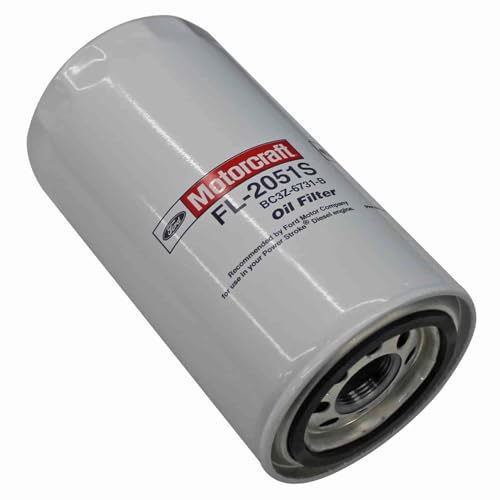
5. Motorcraft FL2051S Oil Filter — Best for Ford Powerstroke Diesel Trucks
Motorcraft is Ford's in-house parts brand, and the FL2051S is the OEM oil filter for several Ford diesel applications. When Ford engineers spec'd the oil change intervals and filtration requirements for their Powerstroke engines, they did it with this filter in mind. Using it means you're matching exactly what the factory intended — no guesswork on compatibility, flow rates, or bypass valve calibration.
The FL2051S uses an efficient filter media designed to increase dirt-collecting capability while capturing the fine particles that accelerate engine wear. Ford's filtration testing focuses heavily on the 10-30 micron particle range, which is where the most damaging wear particles live. Particles smaller than 10 microns generally pass through bearing clearances without causing significant damage, and particles larger than 30 microns are caught by even basic filters. It's that critical middle range where the FL2051S earns its keep.
For Ford truck owners, using Motorcraft parts also keeps your warranty documentation clean. While aftermarket filters won't void your warranty by law (thanks to the Magnuson-Moss Warranty Act), using OEM parts eliminates any potential pushback from dealers. If you're running a Powerstroke and want zero hassle at the service counter, the FL2051S is the straightforward choice.
Pros:
- Genuine Ford OEM part — exact factory specifications
- Enhanced media for capturing engine-damaging particles in the critical 10-30 micron range
- Eliminates warranty and dealer service concerns
- Widely available through Ford dealerships and online retailers
Cons:
- Only fits specific Ford diesel applications — check compatibility carefully
- OEM pricing can be higher than comparable aftermarket alternatives
6. K&N HP-7040 Premium Oil Filter — Best for Mercedes-Benz Diesel Vehicles
K&N built its reputation on high-flow air filters, and they've applied that same airflow-first philosophy to their oil filter line. The HP-7040 is designed for 2011-2022 Mercedes-Benz applications, and its primary engineering goal is clear: maximize oil flow rates without sacrificing filtration quality. For European diesel engines that run tighter tolerances and higher oil pressures, this balance is critical.
The high-efficiency media uses uniform pleats to create a consistent flow path through the filter element. Uniform pleating isn't just a manufacturing preference — it ensures that oil distributes evenly across the entire media surface rather than channeling through weak spots. This even distribution maximizes the filter's effective surface area, which directly translates to longer service life and more consistent filtration throughout the oil change interval.
K&N rates this filter for up to 20,000 miles of engine protection, which aligns well with the extended service intervals that many Mercedes-Benz diesel models recommend. If you're following a European-style extended drain schedule with quality synthetic oil, the HP-7040 is built to go the distance. The premium pricing reflects both K&N's brand positioning and the tighter engineering tolerances required for European diesel applications. For Mercedes owners who take their maintenance seriously, it's a strong match.
Pros:
- High-flow design optimized for European diesel engine requirements
- Uniform pleat structure maximizes filtration surface area
- 20,000-mile rated protection for extended drain intervals
- K&N brand backed by strong warranty support
Cons:
- Limited to specific Mercedes-Benz model years (2011-2022)
- Premium price compared to other filters on this list
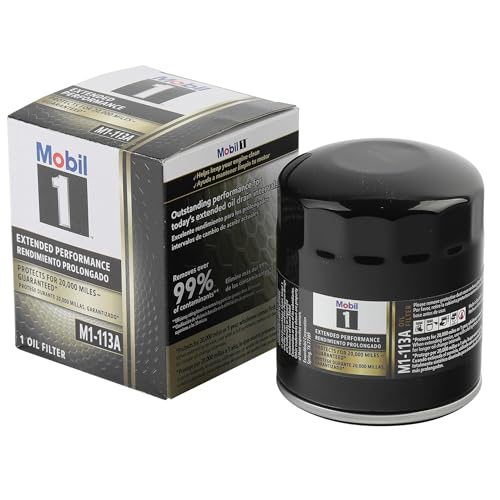
7. Mobil 1 M1-113A Extended Performance Oil Filter (2 Pack) — Best for Extended Drain Intervals
Mobil 1 paired their Extended Performance oil filter with their synthetic oil line, and the M1-113A represents the pinnacle of that matched system. The filter uses a synthetic blend media that removes over 99% of contaminants — and that's not a marketing claim you should take lightly. That 99%+ efficiency rating is backed by independent testing under SAE standards, making it one of the most efficient spin-on filters available for consumer diesel applications in 2026.
The 20,000-mile or one-year protection rating is ambitious but achievable when you're running quality synthetic diesel oil and operating under normal conditions. The key is the synthetic blend media's ability to maintain its structural integrity over those long intervals. Cellulose media breaks down and loses efficiency as miles accumulate; the synthetic fibers in the M1-113A resist that degradation. The two-pack gives you a full year's worth of filter changes for most drivers, and Mobil 1 backs the filter with their Extended Performance Limited Warranty.
If you're already running Mobil 1 synthetic diesel oil, pairing it with the M1-113A is the logical move. The filter and oil are engineered as a system, and using both together gives you the best chance of actually achieving those extended drain intervals. For diesel truck owners who want to minimize time under the hood while maximizing engine protection, this is the filter to buy. Understanding how your oil choice affects engine longevity ties directly into knowing the advantages and disadvantages of synthetic oil.
Pros:
- Over 99% contaminant removal efficiency verified by independent testing
- 20,000-mile or 1-year protection rating — longest on this list
- Synthetic blend media resists breakdown over extended intervals
- Warranty-backed performance claims
- Two-pack for convenient, scheduled maintenance
Cons:
- Premium pricing reflects synthetic media and extended performance claims
- Best results require pairing with Mobil 1 synthetic oil
Buying Guide: How to Choose the Best Diesel Oil Filter
Filter Media Type: Cellulose vs. Synthetic vs. Blend
The filter media is the single most important component determining how well your diesel oil filter performs. You have three main options. Cellulose media is the traditional choice — it's made from plant fibers, costs less, and works fine for standard drain intervals of 3,000-5,000 miles. Synthetic media uses engineered fibers (usually glass or polyester) that capture smaller particles and last longer, making it the right choice for extended drain intervals of 10,000-20,000 miles. Blend media combines both, offering a middle ground on price and performance.
For diesel engines specifically, synthetic or blend media is worth the extra cost. Diesel combustion produces significantly more soot and acidic byproducts than gasoline combustion. That contamination load overwhelms cellulose media faster, reducing filtration efficiency well before your next scheduled oil change. If you're running synthetic diesel oil with extended drain intervals, a cellulose filter is the weak link in your maintenance strategy.
Filtration Efficiency and Particle Size
Filtration efficiency tells you what percentage of particles at a given size the filter captures. A filter rated at 99% efficiency at 20 microns catches 99 out of every 100 particles that are 20 microns or larger. The critical range for engine wear is 10-40 microns — particles in this size range are small enough to enter bearing clearances but large enough to score metal surfaces.
Not every manufacturer publishes their filtration efficiency numbers, which makes direct comparison difficult. When efficiency data is available, pay attention to the test standard used. SAE HS806 and ISO 4548 are the industry standards — filters tested under these protocols give you numbers you can compare apples-to-apples. Marketing claims without a referenced test standard are worth less than the ink they're printed with.
Construction Quality and Bypass Valve
A diesel oil filter operates under significantly higher pressures than a gasoline filter. Cold-start pressure spikes can exceed 100 PSI, and sustained operating pressures run higher than gasoline applications. The filter canister, center tube, and end caps all need to withstand these pressures without deforming or failing. A collapsed center tube or split seam doesn't just mean you need a new filter — it means unfiltered oil has been pumping through your engine.
The bypass valve is your engine's safety mechanism. When the filter media becomes saturated with contaminants, the bypass valve opens to allow unfiltered oil to flow rather than starving the engine of lubrication entirely. Bypass valve opening pressure varies by filter — too low and it opens too easily, sending unfiltered oil through; too high and you risk oil starvation if the filter clogs. Your engine manufacturer specifies the correct bypass pressure, and your filter should match it.
Application Fitment and Cross-Referencing
This might sound obvious, but using the wrong filter on a diesel engine is more dangerous than on a gasoline engine. Diesel oil pressures are higher, oil volumes are larger, and the consequences of a leak or bypass failure are more expensive. Always verify fitment by your engine's original part number — not just by thread size and gasket diameter. Two filters with identical external dimensions can have different bypass valve pressures, media types, and flow capacities.
Cross-reference catalogs from Baldwin, Donaldson, Fleetguard, and Wix are reliable resources. If you're switching brands, look up the cross-reference rather than eyeballing physical dimensions. A filter that threads on and seals doesn't necessarily mean it has the right internal specifications for your engine.
FAQs
How often should you change a diesel oil filter?
Follow your engine manufacturer's recommended interval, which typically ranges from every oil change (5,000-7,500 miles for standard intervals) to every 15,000-20,000 miles with synthetic oil and an extended-performance filter like the Mobil 1 M1-113A. Heavy-duty diesel engines in commercial applications often specify filter changes every 250-500 engine hours. If you operate in dusty conditions, tow heavy loads, or idle frequently, shorten your intervals regardless of the filter type.
Can you use a gasoline engine oil filter on a diesel engine?
No. Diesel oil filters are engineered for higher oil pressures, greater contamination loads, and larger oil volumes than gasoline filters. A gasoline oil filter on a diesel engine risks premature media saturation, structural failure from pressure spikes, and inadequate filtration of diesel-specific contaminants like soot and sulfuric acid byproducts. Always use a filter rated for diesel applications.
What is the difference between full-flow and bypass oil filters?
A full-flow filter handles all of the oil flowing through the engine's lubrication system — every drop passes through the filter media before reaching engine components. A bypass filter only processes a small fraction of the oil flow (typically 5-10%) but filters it to a much finer level, often down to 2-5 microns. Many modern diesel engines use both: a full-flow filter for primary protection and a bypass filter for fine particle removal over time.
Does a more expensive diesel oil filter actually perform better?
Generally, yes — but with diminishing returns. The price difference between a basic cellulose filter and a synthetic-media filter reflects real differences in filtration efficiency, dirt-holding capacity, and service life. A $15 synthetic filter captures more particles and lasts longer than a $5 cellulose filter. However, the difference between a $15 and $25 filter from competing premium brands is often marginal. Focus on media type and filtration specs rather than price alone.
How can you tell if your diesel oil filter is failing?
Warning signs include a drop in oil pressure on your gauge, the oil pressure warning light illuminating, visible oil leaks around the filter housing, and oil that appears excessively dark or gritty between scheduled changes. In severe cases, a failing filter can cause metallic particles to circulate through the engine, which you might hear as increased valve train noise or notice as accelerated wear on oil analysis reports. If oil analysis is available, it's the most reliable early warning system.
Should you pre-fill a diesel oil filter before installation?
For spin-on diesel filters mounted vertically (opening facing up), pre-filling with clean oil reduces the dry-start period where engine components run without full oil pressure. Fill the filter about three-quarters full, let the oil soak into the media for a minute, then top it off and install. For filters mounted at an angle or horizontally, pre-filling isn't practical and will just create a mess. Always apply a thin coat of clean oil to the gasket regardless of mounting orientation to ensure a proper seal and easier removal at the next change.
Buy on Walmart
- LF3349 Fleetguard Lube, Full-Flow Spin-On (Pack of 2) — Walmart Link
- Baldwin Heavy Duty B99-SS Oil Filter,Spin-On, — Walmart Link
- Donaldson P550335 Lube Filter, Spin-on — Walmart Link
- Luber-finer Luberfiner LFP54 Heavy Duty Engine Oil Filter Fi — Walmart Link
- Motorcraft - Oil Filter (FL2051S) — Walmart Link
- K&N Premium Oil Filter: 20,000 Mile Engine Protection, High — Walmart Link
- Mobil 1 Extended Performance Oil Filter, M1-113A | Synthetic — Walmart Link
Buy on eBay
- LF3349 Fleetguard Lube, Full-Flow Spin-On (Pack of 2) — eBay Link
- Baldwin Heavy Duty B99-SS Oil Filter,Spin-On, — eBay Link
- Donaldson P550335 Lube Filter, Spin-on — eBay Link
- Luber-finer Luberfiner LFP54 Heavy Duty Engine Oil Filter Fi — eBay Link
- Motorcraft - Oil Filter (FL2051S) — eBay Link
- K&N Premium Oil Filter: 20,000 Mile Engine Protection, High — eBay Link
- Mobil 1 Extended Performance Oil Filter, M1-113A | Synthetic — eBay Link
Next Steps
- Verify your engine's filter part number — check your owner's manual or the existing filter on your engine. Cross-reference it against the models reviewed above to find the right match for your specific diesel application.
- Check current pricing on your top pick — filter prices fluctuate frequently on Amazon, and multi-packs like the Fleetguard LF3349 and Mobil 1 M1-113A often offer better per-unit value. Compare the two-pack cost against buying singles.
- Stock up for your maintenance schedule — diesel oil filters have an indefinite shelf life when stored in a cool, dry location. Buying a year's supply at once locks in pricing and ensures you always have a filter on hand when it's time for a change.
- Pair your filter with the right oil — if you're choosing an extended-performance filter like the Mobil 1 M1-113A or K&N HP-7040, make sure you're running a synthetic oil rated for your engine's specifications. An extended-life filter with conventional oil defeats the purpose.
- Set a calendar reminder for your next oil change — whether you track by mileage, engine hours, or calendar months, the best filter in the world only works if you actually replace it on schedule. Mark it now so you don't forget.


About Chris Lewis
Chris Lewis developed a deep knowledge of automotive filtration, maintenance, and repair through years of hands-on experience working on vehicles — a passion rooted in time spent in his father's San Francisco auto shop from an early age. He has practical familiarity with air, oil, fuel, and cabin filter systems across a wide range of vehicle makes and models, along with experience evaluating the tools and equipment that serious DIY mechanics rely on. At MicrogreenFilter, he covers automotive and motorcycle filter reviews, maintenance guides, and automotive tool recommendations.
Get FREE Filters now. Or latest free tools from our best collections.
Disable Ad block to get all the secrets. Once done, hit any button below